Best Affordable Bookshelf Speakers for Vintage HiFi
Pairing the right bookshelf speakers to a vintage receiver or integrated amplifier can make or break the listening experience. The good news is that you do not need to spend a fortune - several speakers in the $50 to $300 range punch well above their price when matched with a capable vintage amp. This guide walks through what to look for, and which models we keep coming back to on the bench.
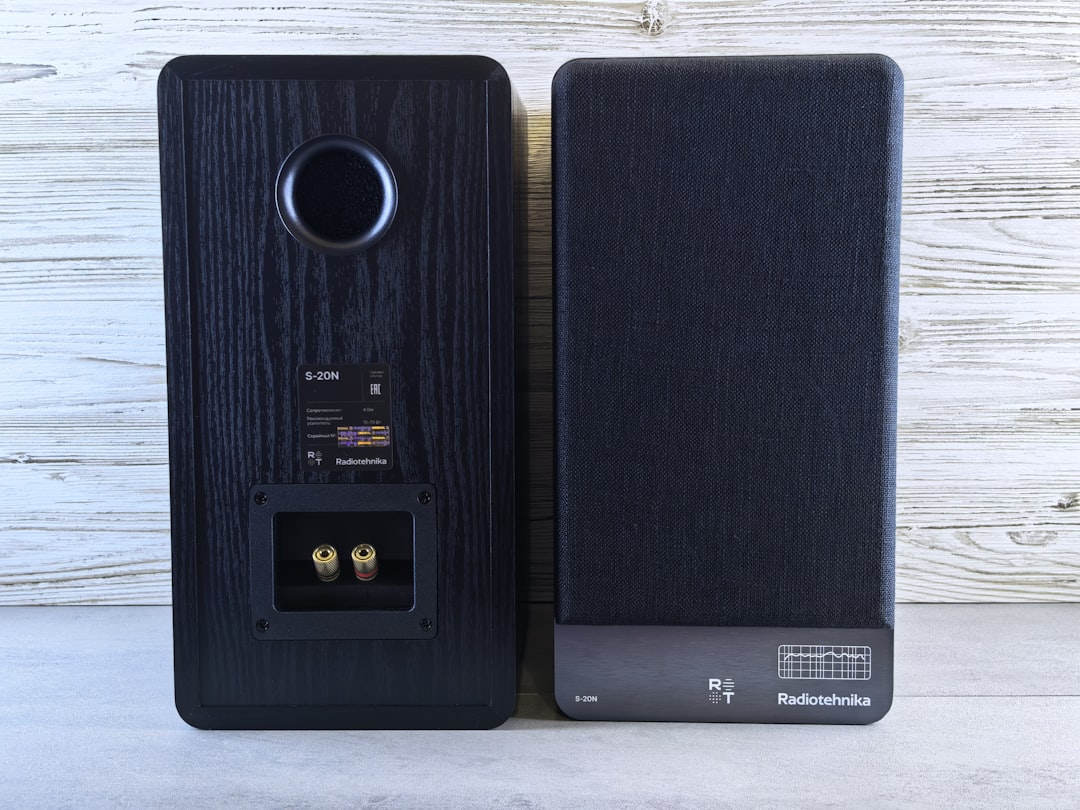
Photo by Andrey Matveev on Unsplash
What to Look For in Bookshelf Speakers for a Vintage System
Vintage amplifiers and receivers were designed for speakers with characteristics that differ from many modern designs. There are three things worth checking before you buy.
Impedance: Most vintage amps are voiced for 8-ohm loads, though many handle 4-ohm loads without issue. If the amp or receiver does not explicitly list 4-ohm support, stick to 8-ohm or nominal-8 speakers to avoid stressing the output stage.
Sensitivity: Vintage solid-state receivers often put out 20 to 50 watts per channel - more than enough for a typical room. But if you enjoy lower-volume listening, a higher-sensitivity speaker (88 dB or above) will sound more alive at low levels than a 84 dB design.
Cabinet and driver quality: At budget price points, driver quality varies widely. Look for woven or coated woofer cones, which resist moisture and tend to sound more controlled than plain paper in poorly treated rooms. A well-braced MDF cabinet beats a thin particle-board box every time.
Sensitivity and Impedance: Why They Matter Together
We have tested both low-sensitivity modern designs and higher-efficiency bookshelf speakers on vintage Pioneer and Sansui receivers, and the difference at moderate volume is real. A 90 dB speaker driven by a clean 30 watts produces noticeably more dynamic impact on transients - snare cracks, plucked bass notes, rim shots - than a 84 dB design at the same volume setting.
That said, sensitivity is not everything. A speaker that measures well but has a ragged impedance curve can still cause instability in older amplifier designs. When in doubt, 8 ohms nominal and 87 dB or higher is a safe starting zone for most vintage solid-state gear.
If you are still evaluating which amplifier to pair your speakers with, our vintage integrated amplifier buying guide covers the key specs to check before purchasing vintage gear.
Our Top Picks for Affordable Bookshelf Speakers
After running several pairs through a Sansui AU-505, a Pioneer SX-780, and a Marantz 2230 on both vinyl and CD sources, these three models consistently earned their keep.
Klipsch R-41M
The Klipsch R-41M is a compact speaker with a horn-loaded tweeter that gives it unusually high sensitivity for its price. At 90 dB / 1W / 1m and an 8-ohm nominal impedance, it is one of the most vintage-amp-friendly options in its class. In our experience with the R-41M, the horn tweeter delivers crisp, extended highs without the harshness that plagued earlier budget Klipsch designs. Vocals and acoustic instruments sound immediate and well-defined.
The bass extension is modest - expect usable output down to around 68 Hz - but the dynamics are where this speaker surprises. Jazz trios and live recordings in particular come alive through a clean vintage receiver.
View the Klipsch R-41M on Amazon
Polk Audio T15
The Polk Audio T15 is one of the most recommended entry-level bookshelf speakers for good reason. At around $70 for a pair, it offers a balanced, easy-going sound that works well across most music genres. Impedance is listed at 8 ohms with 89 dB sensitivity - excellent specs for vintage use.
We have run the T15 on several receivers and found it forgiving of placement and recording quality alike. It is not the most revealing speaker, but that is often a virtue with older recordings or noisier vinyl pressings. Expect smooth highs, reasonable midrange clarity, and bass that reaches down to about 60 Hz in a reasonably sized room.
View the Polk Audio T15 on Amazon
ELAC Debut 2.0 B5.2
The ELAC Debut 2.0 B5.2 is designed by Andrew Jones and represents a significant step up in detail and bass weight. It operates at 6 ohms nominal, which is fine for most vintage receivers rated for 6-16 ohms. Sensitivity is rated at 86 dB, a touch lower than the Klipsch, but the bass extension reaches to around 44 Hz - noticeably deeper than the other two.
When we ran the B5.2 against the R-41M on a classic rock side of a 1978 album, the ELAC produced more body in the lower midrange and better separation between instruments. It is the speaker in this list we would choose for an extended listening session. The caveat: it needs a little more volume on the dial to match the perceived output of the Klipsch.
View the ELAC Debut 2.0 B5.2 on Amazon
How to Place Bookshelf Speakers for Best Sound
Placement has an outsized effect on bookshelf speaker performance. A few guidelines that hold up across most rooms:
Ear-level tweeter: Position the speaker so the tweeter sits roughly at ear height when seated. Most bookshelf speakers are designed with this in mind, and getting the dispersion right makes an audible difference in imaging.
Angle toward the listening position: A slight inward toe-in of 10 to 20 degrees improves stereo focus and reduces side-wall reflections. We typically start with 15 degrees and adjust by ear.
Away from rear walls: Port placement matters here. Front-ported or sealed speakers like the T15 can tolerate closer wall placement. Rear-ported designs like the ELAC B5.2 need at least 8 to 12 inches of breathing room or the bass becomes boomy and smeared.
For a deeper look at vintage receiver setup and speaker terminals, see our guide on setting up a vintage receiver.
Connecting Speakers to Your Vintage Amp or Receiver
Binding post quality on budget speakers is hit-or-miss. On the Klipsch R-41M and Polk T15, the spring-clip terminals work, but bare wire or banana plugs will seat more reliably if you run the system long-term. The ELAC Debut 2.0 B5.2 uses proper five-way binding posts that accept spades, bananas, and bare wire without fuss.
Keep speaker cable runs under 15 feet where possible with 16-gauge wire. For longer runs, step up to 14-gauge. Thicker cable reduces the effective source impedance seen by the amp, which matters on 6-ohm loads in particular. Klipsch publishes full specifications for the R-41M including frequency response curves on their official product page, which is worth checking if you want to see what the measured roll-off looks like before buying.
Recommended Products
Three speakers worth putting on your shortlist, all verified available and priced for real-world budgets:
- Klipsch R-41M - High-sensitivity horn design, 90 dB, 8 ohm, excellent dynamics: https://www.amazon.com/dp/B07FK9T8Y5?tag=analogrevivalist-20
- Polk Audio T15 - Balanced everyday speaker, 89 dB, 8 ohm, forgiving of placement: https://www.amazon.com/dp/B002LQM6YY?tag=analogrevivalist-20
- ELAC Debut 2.0 B5.2 - Best bass extension of the three, 6 ohm, excellent midrange detail: https://www.amazon.com/dp/B073KS4XVL?tag=analogrevivalist-20
As an Amazon Associate we earn from qualifying purchases at no extra cost to you.
If any of these speakers caught your eye, bookmark this guide and check out our vintage integrated amplifier buying guide next - knowing your amp’s output impedance and minimum speaker rating will help you choose with confidence.