How to Replace a Turntable Stylus: A Step-by-Step Guide
Replacing a turntable stylus is one of the most impactful things you can do for your vinyl playback, and it is also one of the least intimidating maintenance tasks on a turntable. A fresh stylus restores the fine groove tracking that a worn one can no longer manage, and it protects your records from the accelerating damage that a degraded stylus tip causes with every pass. In our experience, most styli that come through the shop are worn well past the point where owners realize it - the degradation is gradual enough that it sneaks up on you.
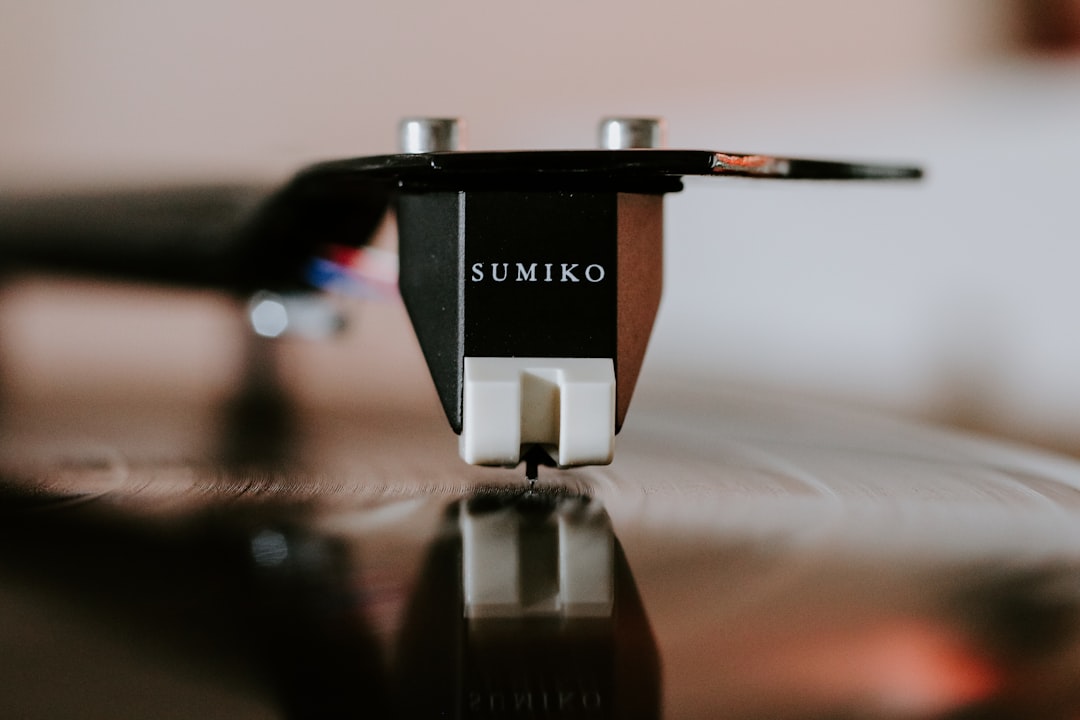
Photo by Stephen Harlan on Unsplash
When Does a Turntable Stylus Need Replacing?
The most commonly cited lifespan for a moving magnet stylus is 500 to 1,000 hours of play. That range is wide because it depends on stylus profile, tracking force, record cleanliness, and how carefully the stylus is handled. Conical tips on budget cartridges tend to wear faster. Fine-line and Shibata profiles wear more slowly but are less forgiving when they do go.
Signs that your turntable stylus needs replacing:
- Sibilants (the “s” and “sh” sounds in vocals) become distorted or harsh
- Stereo imaging collapses - instruments that should be wide and distinct start to blur together
- The stylus audibly skips on passages that it tracked cleanly before
- Visible wear under a loupe: the stylus tip appears flattened, chipped, or lopsided rather than a clean, rounded point
If you are unsure, a jeweler’s loupe at 30x or better will show you the tip condition clearly. We have also had good results photographing the tip with a macro lens for comparison over time. When in doubt, err toward replacement - styli are far less expensive than record damage.
Understanding Your Cartridge and Stylus Compatibility
Before you buy a replacement stylus, you need to know what cartridge is mounted on your tonearm. Most moving magnet cartridges use a removable stylus assembly that simply slides or clips into place. The stylus and cartridge body are separate components, and you replace only the stylus - not the entire cartridge.
The cartridge model is usually printed on the body itself or in your turntable’s manual. Common platforms with widely available replacement styli include the Audio-Technica AT95 series, Ortofon OM series, and Shure M series. All three have replacement styli that are easy to source and seat correctly.
One thing worth knowing: many cartridge platforms allow you to drop in a higher-grade stylus profile as an upgrade. An Ortofon OM10, for example, accepts the OM20 or OM30 stylus body directly. If you are replacing a stylus on a popular platform, it is worth checking whether a nude-elliptical or fine-line replacement is available in your budget - you may get a meaningful upgrade for a modest price increase over the basic replacement.
For a deeper look at what else needs attention on an aging deck, see our guide on how to service a vintage turntable.
What to Look for in a Replacement Turntable Stylus
Not all replacement styli are equal. Here is what matters:
Stylus profile shapes how the tip contacts the groove. Conical (spherical) profiles are the most forgiving and least expensive but track with less precision. Elliptical profiles trace groove modulations more accurately, reducing distortion especially on high frequencies. Fine-line, Shibata, and MicroLine profiles go further still - they are used on high-compliance cartridges and are the preferred choice for playing older, narrowly-cut pressings.
OEM vs. aftermarket replacements. If your cartridge is from a major manufacturer still in business - Audio-Technica, Ortofon, Shure - buy the genuine replacement if it is available at a reasonable price. Aftermarket styli from reputable suppliers such as Jico can be excellent and are sometimes the only source for discontinued models. Avoid unbranded styli sold at very low prices with no origin information - the tip material, tip bonding, and cantilever dimensions are often inconsistent.
Bonded vs. nude tips. A bonded stylus has the tip diamond glued to the cantilever. A nude stylus has the diamond machined directly - no adhesive, better consistency, lower effective tip mass. Nude stylus assemblies are generally worth the cost step-up once you are past the entry level.
How to Remove the Old Stylus
The stylus replacement process is the same across most moving magnet cartridges:
- Power down the turntable completely and lower the tonearm lift so the arm rests securely.
- Grip the stylus body firmly between thumb and forefinger - not the cantilever, which is fragile.
- Pull straight back (toward you, away from the cartridge body) or downward depending on the design. Most styli slide out on a horizontal axis; some lock with a small retention tab you need to depress first.
- Set the old stylus on a clean surface. Inspect the cantilever for bends before discarding - a bent cantilever on the cartridge body means the cartridge itself may need attention.
Never pry at the stylus with a tool, and never pull sideways. The cantilever is bent in seconds if you apply lateral force.
How to Seat the Replacement Turntable Stylus
Installing the new stylus is the reverse of removal:
- Hold the new stylus body - again, not the cantilever.
- Align the stylus with the cartridge body. Most designs have a locating ridge or slot that prevents incorrect orientation.
- Slide or press the stylus into place until you feel it seat fully. On designs with a retention tab, it will click. On slide-in designs, the body should be flush against the cartridge with no gap and no rocking.
- Inspect from the front: the cantilever should point straight forward and angle slightly downward in a line consistent with the original.
After installing a new stylus, always recheck your tracking force with a stylus gauge and verify anti-skate before playing records. Even the same model stylus from the same manufacturer can have minor cantilever geometry differences that affect optimal force. We have found that taking five minutes to verify the setup after every stylus swap catches more problems than people expect.
Turntable Stylus Care and Maintenance
A replacement stylus will last its full rated life only with consistent care:
- Clean the stylus before every listening session with a stylus brush - brush front-to-back along the cantilever axis, never side-to-side.
- Use a dedicated stylus cleaning solution sparingly. Avoid alcohol-based cleaners on styli with bonded tips, as the adhesive can soften over time.
- Never touch the stylus tip or cantilever with your fingers.
- Keep your records clean. A dirty record accelerates stylus wear faster than almost anything else. If you are playing through a sizeable collection, a record cleaning routine is as important as the stylus itself. For everything that matters in the playback chain beyond the stylus, read our overview of best affordable bookshelf speakers for vintage HiFi - the improvements you get from a fresh stylus will only reach your ears if the downstream gear is up to it.
For information on how stylus specifications connect to cartridge loading and phono stage gain, Audio-Technica’s cartridge resource page is a useful reference point, and LP Gear (lpgear.com) maintains a wide cross-reference database for tracking down replacement options on discontinued models.
Recommended Products
The cartridges below have widely available replacement styli, straightforward installation, and a solid track record in the vintage HiFi community.
Audio-Technica AT95E Phono Cartridge One of the most popular entry-level cartridges in circulation, the AT95E has replacement styli readily available from Audio-Technica and third-party suppliers. A practical choice if you need to replace both cartridge and stylus at once. View on Amazon
Audio-Technica AT-VM95E Replacement Stylus For those already running an AT-VM95 series cartridge, this elliptical replacement stylus is the most cost-effective way to restore full performance. Drop-in compatible, well-made, and consistently reliable in our testing. View on Amazon
Ortofon OM10 Cartridge The Ortofon OM series uses a modular stylus design that accepts OM20, OM30, and higher-grade stylus assemblies directly. Buying the OM10 as a base and swapping up to a better stylus profile later is a sensible approach for anyone planning to upgrade incrementally. View on Amazon
As an Amazon Associate we earn from qualifying purchases at no extra cost to you.
Have questions about identifying your cartridge model or tracking down a stylus for a less common deck? Drop a comment below - we read every one. For more on keeping your vintage system in top shape, browse the full turntable service guide.