Vinyl vs. CD: What Actually Sounds Better?
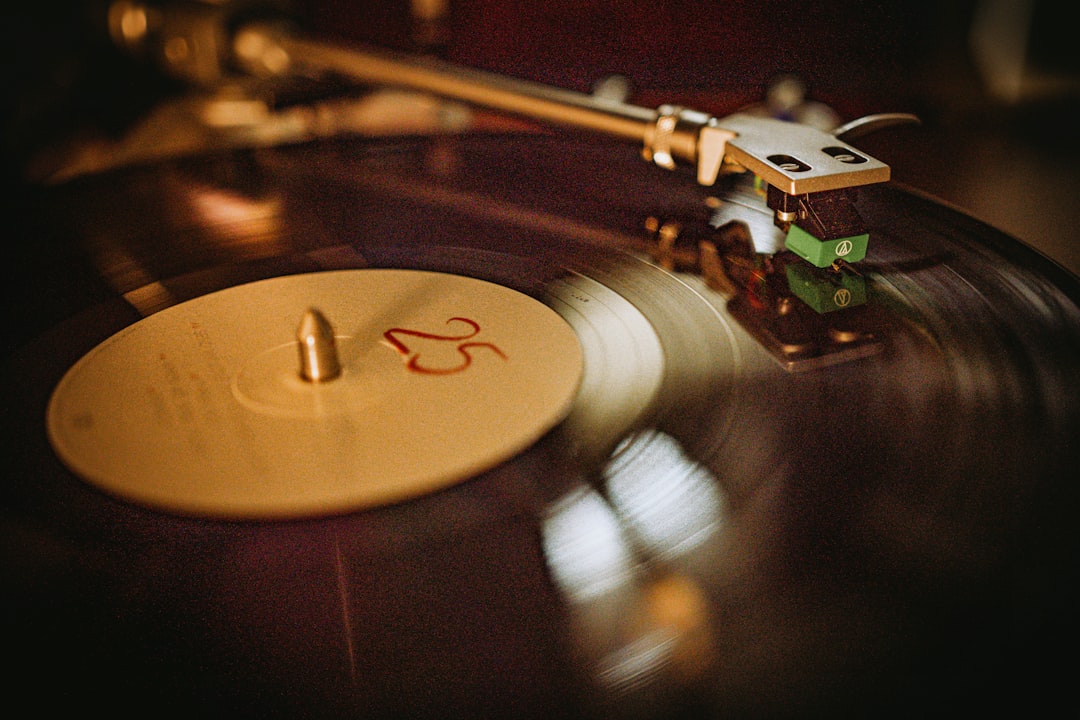
Photo by Henry Lai on Unsplash
Few arguments in audio have outlasted the vinyl vs. CD debate. It started in the early 1980s when the compact disc arrived with promises of “perfect sound forever,” and it has never really stopped. Today, vinyl sales are at their highest point in decades while CD players gather dust at thrift stores. So which format actually sounds better? The honest answer is less straightforward than either side usually admits, and it depends heavily on equipment, mastering, and what you mean by “better.”
How Vinyl and CD Store Sound Differently
The most important thing to understand is that vinyl and CD are not competing implementations of the same idea. They are fundamentally different approaches to storing and reproducing audio.
Vinyl records store sound as a physical groove cut into a disc. The groove’s shape mirrors the original audio waveform continuously. When a stylus tracks that groove, it follows the analog wave and converts mechanical movement into an electrical signal. That signal is then amplified and sent to your speakers. There is no sampling, no digital conversion, and no mathematical reconstruction. The waveform exists in the groove and the stylus reads it directly.
CDs store sound as a sequence of digital samples. According to the Nyquist sampling theorem, a sample rate of 44,100 samples per second can accurately represent any frequency below 22,050 Hz, which covers the full range of human hearing (roughly 20 Hz to 20,000 Hz). Each sample is encoded at 16-bit depth, giving 65,536 possible amplitude values. At playback, a digital-to-analog converter reconstructs the waveform from those samples and sends it to your amplifier.
Both approaches have genuine engineering tradeoffs, and understanding them is the only way to make sense of what the listening tests actually show.
The Technical Case for CD
On paper, the CD format wins almost every measurable comparison.
Signal-to-noise ratio: A well-mastered CD has a theoretical SNR of approximately 96 dB. Vinyl, depending on pressing quality and cartridge, typically achieves 60-70 dB. That gap is audible. On a vinyl record, you can often hear faint surface noise or hiss between quiet passages. On a CD, the silence between tracks is genuinely silent.
Frequency response: CDs are flat from 20 Hz to 20,000 Hz by specification. Vinyl requires the RIAA equalization curve to be applied during the cutting process and accurately reversed during playback. If your phono preamp does not apply the RIAA correction precisely, the frequency balance shifts throughout the audible range. Most quality phono stages handle this well, but it introduces a variable that CD playback simply does not have.
Channel separation: CD channel separation is effectively perfect, exceeding 90 dB. Vinyl channel separation depends on the cartridge design and cantilever geometry, typically ranging from 25 dB to 35 dB. Crosstalk between channels is measurable and occasionally audible as slightly reduced stereo imaging precision.
No format degradation: A CD played 10,000 times in a clean player sounds identical to the first play, assuming no disc damage. Every vinyl play causes microscopic groove wear. A stylus tracking a groove at even the correct tracking force slowly erodes the groove walls over hundreds of hours. The first play of a pressing will always sound marginally better than the hundredth.
Dynamic range: Modern music is often heavily compressed in mastering, which limits how much this matters in practice. But for orchestral recordings, where the difference between a whispered string section and full brass fortissimo is enormous, the CD’s wider dynamic range is a genuine advantage that vinyl cannot match.
The Case for Vinyl
If CD wins every measurable comparison, why does vinyl have such a devoted following, including some of the most experienced listeners in audio?
The answer comes down to several things that measurements do not fully capture.
Harmonic distortion that sounds musical: Vinyl introduces harmonic distortion, particularly second-order harmonics, which are musically related overtones. In small amounts, many listeners find them pleasant or even “warm.” Tube amplifiers produce a similar distortion profile, which is part of why the vintage audio world tends to favor both tubes and vinyl together. The distortion is real, but it can be a pleasant coloration rather than a harsh artifact.
The mastering variable: This is the factor that most vinyl advocates undersell in the format debate, and it matters enormously. The same album released on vinyl and CD is very often mastered differently. For decades, the standard practice was to use more dynamic masters for vinyl (because heavy compression physically damages groove geometry and causes the stylus to skip) and loudness-maximized masters for CD and streaming. A dynamically rich vinyl pressing of a 1970s album may genuinely sound better than a heavily brickwalled CD reissue, not because vinyl sounds better as a format, but because it received a more careful and less compressed master. Separating the format from the mastering is the hardest part of this comparison.
The early digital problem: The vinyl revival of the 2010s was partly a backlash against early CD sound, and some of that criticism was warranted. The first CD players of the early 1980s had poor DACs, aggressive high-frequency rolloff filters at the 22 kHz cutoff, and measurable jitter problems. When audiophiles said early CDs sounded “harsh” or “clinical,” they were often reacting to the engineering limitations of early digital hardware rather than the format’s fundamental capabilities. Modern DACs have largely solved those problems, but the reputation stuck.
Physical ritual and engagement: There is genuine value in the ritual of vinyl listening. Cleaning the record, cueing the stylus carefully, flipping at the side break. These actions encourage focused, attentive listening rather than background listening. Whether that counts as vinyl “sounding better” is a philosophical question, but the engagement is real and it changes how music is perceived.
Specs Head-to-Head
| Characteristic | Vinyl | CD |
|---|---|---|
| Frequency response | 20 Hz - 20 kHz (RIAA EQ dependent) | 20 Hz - 20 kHz (flat) |
| Dynamic range | ~65-70 dB typical | ~96 dB theoretical |
| Signal-to-noise ratio | ~60-70 dB | ~96 dB |
| Channel separation | 25-35 dB | Greater than 90 dB |
| Format degradation | Yes, each play | None (disc damage aside) |
| Mastering differences | Common | Common |
| Playback chain complexity | High | Lower |
What Listening Tests Actually Show
The most rigorous format comparisons use blind or double-blind listening tests where neither the listener nor the experimenter knows which format is playing. The results consistently point in the same direction.
When test conditions are carefully controlled (same recording, same master, matched output levels, blind listening panel), the differences between high-quality digital playback and well-maintained vinyl are small and inconsistently identified. Some listeners reliably prefer vinyl. Many cannot distinguish the formats at better-than-chance rates. The Audio Engineering Society has published multiple papers examining format preferences under controlled conditions, and the consensus finding is that stated preferences often do not survive blind listening.
A pattern that appears repeatedly: vinyl is preferred in sighted listening, meaning the listener can see which format is playing, but the preference weakens or reverses in the same session under blind conditions. This strongly suggests that expectation and the visual ritual of vinyl contribute to perceived sound quality, which does not make the experience less real but does change what the preference means.
That said, these tests have real limitations. They cannot account for the fact that vinyl often has better masterings on classic titles, that the listening ritual promotes a kind of musical engagement that is itself part of the experience, and that experienced audiophiles have spent years optimizing their vinyl playback chains in ways that blind listening protocols may not replicate.
In our experience comparing both formats on the same system, well-pressed vintage vinyl of recordings from the 1960s through the 1980s often does sound better than easily available CD versions. But the advantage almost always traces to mastering differences rather than any inherent quality of the groove medium.
Common Mistakes That Make Either Format Sound Worse
Both vinyl and CD are capable of exceptional results and capable of disappointing results. Most of the disappointment comes from avoidable setup and equipment errors.
Vinyl Mistakes
A worn or damaged stylus is the single biggest degradation in vinyl sound quality, and it is more common than most listeners realize. A stylus that has logged several hundred hours should be inspected and likely replaced. We have tested the same record before and after a stylus replacement on identical cartridges and the difference is not subtle. If your vinyl sounds veiled, distorted in the inner grooves, or lacking in high-frequency detail, the stylus is the first thing to check. See our guide on replacing a turntable stylus if you suspect yours is overdue.
Improperly set tracking force causes both audible distortion and accelerated record wear. Tracking too light is not safer than tracking at the specified force. An undertorqued stylus will mistrack and skip on dynamic peaks, gouging the groove walls far more aggressively than the correct force would. Every cartridge has a specified tracking force range and the right force is somewhere within it, measured with a proper scale rather than guessed.
A cheap or poorly matched phono preamp affects frequency response and introduces noise into the playback chain. The RIAA curve must be applied accurately or bass and treble response shift in ways that are easy to mistake for “vinyl sound” when they are actually phono stage error.
CD Mistakes
Budget DACs introduce harshness, jitter artifacts, and high-frequency glare that give digital playback a bad reputation it does not deserve at its best. The DAC inside a budget DVD player or a cheap portable CD player is not comparable to a standalone high-quality DAC or a modern CD transport with a good analog output stage.
Failing to match output levels when comparing formats is a pervasive problem in informal listening tests. Slightly louder almost always sounds better to human hearing. If vinyl is even 1-2 dB louder at the listening position than the CD playing the same track, many listeners will report that vinyl sounds better regardless of other factors.
Dismissing CD as “just digital” without accounting for the enormous quality range in digital playback hardware is the mirror image of dismissing vinyl as “just noise and distortion.” Both formats have a floor and a ceiling, and the ceiling is very high.
FAQ
Does vinyl actually sound warmer than CD?
In most direct comparisons, it does. Vinyl introduces low-level second-order harmonic distortion and gentle high-frequency rolloff that many listeners perceive as warmth. Whether that warmth is a faithful representation of the recording or a coloration added by the format depends on your perspective. Accurate reproduction advocates see it as distortion. Many experienced listeners prefer it anyway, and that preference is not irrational.
Is vinyl higher resolution than CD?
This is a common claim that does not hold up under measurement. Vinyl does not capture more information than a properly mastered 44.1 kHz / 16-bit CD. The 16-bit / 44.1 kHz standard exceeds the demonstrated limits of human hearing in both frequency range and dynamic range. Vinyl has a higher noise floor, more distortion, and less channel separation than CD. It is not higher resolution by any technical measure.
Why do some audiophiles strongly prefer vinyl if CD measures better?
Several reasons converge. Vinyl often has better, more dynamic masterings on classic titles. The format’s distortion profile is perceived as pleasant rather than harsh by many ears. The listening ritual promotes focused engagement. And for many listeners, the aesthetic and tactile dimensions of the format are a genuine part of the experience that has value independent of measured performance.
Does CD quality degrade over time?
Properly stored CDs last decades without measurable degradation. “CD rot” is a real phenomenon but affects a small subset of discs from certain manufacturing eras with adhesive or lacquer problems. A well-maintained CD played thousands of times in a clean mechanism sounds identical each time. Vinyl degrades measurably with every play, though the degradation is slow on a well-maintained deck with a fresh stylus and clean records.
Is it worth buying a CD player in 2026?
If you have a vinyl-focused system, adding a good CD transport and DAC gives you access to an enormous library at very low cost - used CDs are often priced under a dollar each at thrift stores - with playback quality that rivals much more expensive streaming setups. For listeners who care about sound per dollar, CD is one of the best values available.
Recommended Products
Getting the most from vinyl requires a quality phono stage that applies accurate RIAA equalization and introduces minimal noise. These are products we have tested and found genuinely useful.
Fosi Audio Box X5 Phono Preamp - A compact, well-measuring phono stage for MM and MC cartridges. Accurate RIAA equalization at this price point makes a meaningful difference in how vinyl competes with CD in a direct comparison.
Pro-Ject Audio Phono Box DC MM/MC Phono Preamp - A step up in build quality and noise performance. This is the unit we use for most listening sessions. It has enough gain and loading flexibility to handle a wide range of cartridges without coloring the sound.
iFi Zen Phono 3 Audiophile MM/MC Turntable Pre-Amplifier - iFi’s serious-tier entry into the phono stage market. Balanced output option and a very low noise floor make this competitive with units at significantly higher price points.
The vinyl vs. CD debate is ultimately less about format and more about the full chain from recording to ear. A well-mastered album on a properly maintained vinyl setup, through a quality phono stage and amplifier, can be a remarkable listening experience. So can a great recording through a resolving digital system with a good DAC. The format matters less than how carefully the rest of the chain is assembled.
Bookmark this guide and read our phono preamps explained guide next to understand how your phono stage shapes everything you hear from your records.