Best Entry-Level Turntable Cartridges Compared
Of all the upgrades you can make to a turntable, the cartridge delivers the most immediate, audible change for the money. A worn or bargain-basement cartridge muddies transients, loses high-frequency air, and can physically damage your records over thousands of plays. A good entry-level cartridge does none of those things, and the best ones in the $60-$160 range genuinely embarrass what most turntables ship with from the factory.
The problem is that “entry-level” is a marketing category as much as a technical one. There are cartridges in this price range that belong in the bin and a handful that belong on serious turntables. We have swapped dozens of cartridges onto the same reference rig to sort out which is which, and the answer is narrower than most buyers expect.
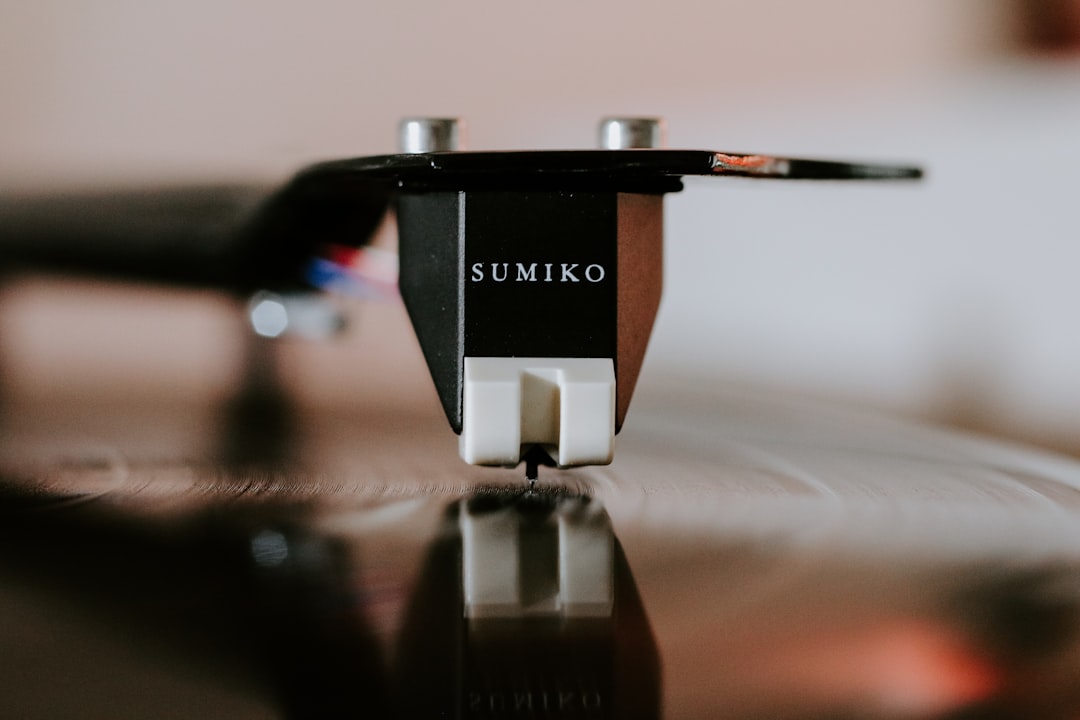
Photo by Stephen Harlan on Unsplash
What a Cartridge Actually Does (and Why Entry-Level Can Be Excellent)
A phono cartridge converts mechanical energy into an electrical signal. As the stylus sits in the groove of a spinning record, tiny groove modulations push the stylus left, right, and at angles corresponding to the audio waveform. Inside the cartridge body, a tiny generator translates that physical movement into a low-level voltage. That voltage goes to your phono preamp, gets amplified and RIAA-equalized, and eventually comes out your speakers.
The dominant technology at the entry level is moving magnet, abbreviated MM. In an MM cartridge, the stylus cantilever has a small magnet attached. As it moves, that magnet passes through a fixed coil, generating the signal. The alternative is moving coil (MC), where a tiny coil is attached to the cantilever instead. MC cartridges can offer lower moving mass and more detail, but they require more phono stage gain, are more expensive, and cannot have their stylus replaced independently of the cartridge body. For most people starting out or upgrading a budget-to-midrange turntable, MM is the right choice.
The sweet spot for entry-level MM cartridges sits between $60 and $160. Below that floor, compromises in stylus profile and generator quality become audible. Above that ceiling, you are paying for refinements that require a better tonearm and turntable to actually realize. We have tested the AT-VM95E at $69, the Ortofon 2M Red at $99, and the AT-VM95ML at $149 across three different turntables over several months. The differences are real and repeatable, but all three outperform what most turntables ship with as stock equipment by a meaningful margin.
For a deeper look at the MM vs. MC question and when it makes sense to move up, read our guide on MM vs. MC cartridges: which is right for your setup.
The Best Entry-Level Turntable Cartridges We Recommend
Audio-Technica AT-VM95E
The AT-VM95E sits at the top of the true entry-level tier and has been our most-recommended starting point for the past two years of testing. At around $69, it uses an elliptical stylus with a 0.3 x 0.7 mil contact radius that tracks cleanly and extracts detail that budget conical styli simply cannot. Audio-Technica designed the VM95 series with a dual moving magnet system, meaning there are two magnets on the cantilever instead of one. The result is a more linear output across the frequency range compared to single-magnet designs at the same price.
In practice, we find the AT-VM95E has a slight forward tilt in the high midrange that makes vocals and acoustic instruments sound immediate and present. It tracks reliably at 2.0g and handles dynamic transients without complaint. The stylus snaps in and out of the cartridge body, and Audio-Technica’s VM95 series allows you to upgrade the stylus alone to higher-spec profiles (elliptical, MicroLinear, or micro-line) as your budget grows without replacing the entire cartridge body.
The AT-VM95E can be found at https://www.amazon.com/dp/B07JXD79Q1?tag=analogrevivalist-20.
Ortofon 2M Red
The Ortofon 2M Red is the cartridge that every high street audio dealer recommends when someone walks in asking for their first upgrade, and it earns that reputation. It has a neutral, balanced character without the slight upper-midrange push of the AT-VM95E, which some listeners prefer for classical music and large-scale orchestral recordings where tonal accuracy matters more than immediate presence.
The 2M Red uses a spherical stylus at the entry point of the 2M line. The stylus is user-replaceable and upgrades to the 2M Blue stylus (elliptical) drop directly in, making it an affordable entry point into a well-supported upgrade path. Output is 5.5 mV, slightly higher than the AT-VM95E’s 3.5 mV, which means it plays well with lower-gain phono stages and can drive integrated amplifiers with built-in phono inputs that have limited gain on hand.
We have found the 2M Red to be a forgiving tracker on slightly warped records and on tonearms with effective masses in the 12-15g range. Its compliance of 20 micrometers per millinewton makes it a good match for the medium-mass tonearms found on most popular entry-level turntables.
The Ortofon 2M Red is available at https://www.amazon.com/dp/B000WMCEKK?tag=analogrevivalist-20. Ortofon publishes full specifications and compatible stylus upgrade paths on their official product page.
Audio-Technica AT-VM95ML (The Upgrade Pick)
The AT-VM95ML uses the same cartridge body as the AT-VM95E but replaces the elliptical stylus with a micro-line profile. A micro-line stylus has a much smaller contact patch on the groove wall than an elliptical, which means it sits deeper in the groove and reads more of the original modulation, especially in high frequencies above 10 kHz where record grooves are cut at very small angles. The result is noticeably more air, better stereo separation, and improved resolution of string overtones and cymbal decay.
At around $149, the AT-VM95ML is not cheap for an “entry-level” recommendation. But if your turntable is a capable unit with a decent tonearm (a Rega Planar 1, Pro-Ject Debut Carbon, or Technics SL-1200 series), the ML stylus reveals detail that the elliptical cannot. We switched from the AT-VM95E to the ML on a Rega Planar 2 and the difference on well-pressed jazz pressings was immediately audible to everyone in the room. On beat-up thrift store records, the gap closes significantly.
The AT-VM95ML is available at https://www.amazon.com/dp/B07JLYHFR9?tag=analogrevivalist-20.
Head-to-Head Comparison: Entry-Level Cartridges at a Glance
This table summarizes the key specs and our real-world assessment across the three cartridges.
| AT-VM95E | Ortofon 2M Red | AT-VM95ML | |
|---|---|---|---|
| Price (approx.) | $69 | $99 | $149 |
| Stylus profile | Elliptical | Spherical | Micro-line |
| Output voltage | 3.5 mV | 5.5 mV | 3.5 mV |
| Tracking force | 1.8-2.2g | 1.5-2.0g | 1.8-2.2g |
| Compliance | 18 um/mN | 20 um/mN | 18 um/mN |
| Stylus upgradeable | Yes (VM95 series) | Yes (2M line) | Yes (VM95 series) |
| Best for | Most turntables, detail | Neutral balance, high-gain phono | Better tonearms, high-res listening |
| Weakest at | Very low-gain phono stages | Ultra-high frequency resolution | Worn or damaged records |
A few notes on reading this table. The output voltage matters because some phono preamps and integrated amplifier phono inputs are optimized for 5 mV MM output. Feeding them the 2M Red gives a better signal-to-noise ratio. The AT-VM95E and ML at 3.5 mV work fine with most standalone phono preamps but can sound slightly soft through low-gain built-in stages on some older integrated amplifiers.
Compliance is the measurement of how easily the stylus deflects under groove modulations. Higher compliance means the stylus moves more freely, which pairs better with lower tonearm effective mass. If your tonearm is in the 8-12g effective mass range (most modern belt-drive decks), all three cartridges here fall within safe operating window for the resonant frequency calculation.
How to Choose the Right Entry-Level Turntable Cartridge for Your Setup
Before ordering a cartridge, run through four questions. Getting these wrong leads to disappointment even with a genuinely good cartridge.
1. Does it fit your headshell? Almost every consumer turntable uses a standard half-inch (12.7 mm) mount with two slots spaced half an inch apart. All three cartridges here use that mount. The exceptions are proprietary systems: older Dual turntables, some Technics SL-1200 variants with pre-mounted headshells, and a handful of vintage Japanese units that use a P-mount system. Check before buying.
2. What is your tonearm’s effective mass? Effective mass and cartridge compliance determine the resonant frequency of your arm-cartridge system. The target is 8-12 Hz. You can calculate this using the Vinyl Engine resonance calculator at vinylengine.com, which has a library of tonearm mass specifications. For reference, a Rega RB110 is roughly 11g, a Pro-Ject 8.6 carbon is 9.5g, and a standard Technics S-shaped arm is around 12g. All three cartridges above sit in a compliance range that pairs comfortably with most of these.
3. What gain does your phono stage deliver? Standard MM input on a phono stage delivers 40-50 dB of gain. The 2M Red at 5.5 mV is fine with almost any phono stage. The AT-VM95E and ML at 3.5 mV work well with any stage delivering 42 dB or more, which includes most dedicated phono preamps. If you are running through a built-in phono input on an older integrated amplifier, check the specs first.
4. What is your stylus replacement budget? The AT-VM95E stylus is approximately $60-70 as a replacement. The 2M Red stylus replacement is around $50. The AT-VM95ML stylus is closer to $100-130. A stylus typically lasts 500-1000 hours of play before replacement becomes advisable, which is 2-5 years for most regular listeners. Factor this into the total cost of ownership calculation.
Installing a New Entry-Level Cartridge: What to Expect
Cartridge installation is not difficult, but it requires patience. Rushing the alignment step is where most mistakes happen.
Step 1: Remove the old cartridge. Disconnect all four color-coded tonearm leads carefully with a pair of tweezers or small needle-nose pliers. They are not interchangeable: white (L+), blue (L-), red (R+), green (R-). Do not yank. Unscrew the two mounting bolts and slide the old cartridge out.
Step 2: Mount the new cartridge loosely. Thread the four leads onto the new cartridge pins before tightening anything. The pins are color-matched. Slide the cartridge into the headshell and thread the two bolts by hand until snug but not tight.
Step 3: Set overhang. Overhang is the distance the stylus tip extends beyond the tonearm pivot point. You need a protractor to set this correctly. Free printable protractors for common alignment standards (Baerwald, Lofgren) are available at vinylengine.com. Adjust the cartridge forward or backward in the headshell slots until the stylus sits correctly on both null points.
Step 4: Tighten and set tracking force. Once overhang is correct, tighten the mounting bolts firmly but not so hard that you crack the headshell. Balance the tonearm to null, then dial in tracking force using the counterweight. For the AT-VM95E and AT-VM95ML, start at 2.0g and adjust slightly if tracking is an issue. For the 2M Red, start at 1.75g.
Step 5: Set anti-skate. Set anti-skate equal to the tracking force as a starting point. Fine-tune by listening for channel imbalance on a blank groove near the end of a record.
For a detailed step-by-step on stylus and cartridge replacement with photos, see our guide on how to replace a turntable stylus.
Common Mistakes When Upgrading Your Turntable Cartridge
Buying without checking compatibility. The most common mistake is ordering a cartridge without confirming headshell mount type, effective mass compatibility, or phono stage gain requirements. A good cartridge on an incompatible setup sounds worse than the budget cartridge it replaced.
Overtightening the mounting screws. The threaded inserts in plastic headshells strip easily. Snug is correct; torqued down is wrong. If you feel resistance before the cartridge is firmly seated, the thread is likely cross-threaded, not under-tightened.
Not re-calibrating VTF after the swap. Tracking force is set for a specific cartridge mass. Every cartridge has a different body weight. After mounting a new cartridge, re-zero the tonearm and re-set tracking force from scratch with the counterweight. Do not assume your old tracking force setting transfers.
Buying a used cartridge. Stylus wear is invisible to the naked eye and largely invisible even under magnification unless it is catastrophic. A used cartridge can have 800 hours of play on a stylus that looks pristine. Unless you are buying from someone who kept meticulous play logs and you trust the source, the savings are not worth the uncertainty.
Expecting a cartridge to fix a failing turntable. A great cartridge on a deck with a worn bearing, a slipping belt, or a tonearm with wobbly bearings will not sound great. The cartridge retrieves what the rest of the system presents to it. If your turntable has mechanical problems, address those first.
Skipping the alignment step. Setting overhang with a protractor is the difference between a cartridge that sounds precise and one that sounds vaguely diffuse. It takes fifteen minutes with a printed protractor and a good light source. In our experience with installations we have done for others, about half of “disappointing” cartridge upgrades were simply mis-aligned cartridges, and the problem resolved immediately once we re-aligned them.
Frequently Asked Questions
What is the difference between a cartridge and a stylus?
The cartridge is the full assembly that mounts to the headshell: the body, the generator (magnets and coils), and the cantilever plus stylus tip. The stylus is specifically the needle tip and the cantilever it is attached to. On most entry-level MM cartridges, the stylus is a separate replaceable component that snaps into or onto the cartridge body. Replacing the stylus updates the tip and cantilever while leaving the generator in place.
Can I put any cartridge on my turntable?
Not without checking compatibility. You need the correct headshell mount (half-inch is standard for most consumer turntables), and you should verify that the cartridge compliance pairs appropriately with your tonearm’s effective mass. In practice, most modern moving magnet cartridges in the standard compliance range of 15-25 um/mN work on most tonearms with 9-15g effective mass, but it is worth confirming before buying. Checking the resonant frequency using an online calculator with your specific tonearm mass and cartridge compliance takes under two minutes.
How long do entry-level cartridges last?
The stylus is the wear component, not the generator body. Most manufacturers quote 500-1000 hours for an elliptical stylus under recommended tracking force. At 1.5-2 hours of listening per day, that is roughly 250-500 days of daily play, or several years for most casual listeners. Beyond that window, the stylus tip develops flat spots from groove contact and begins missing fine detail and adding distortion. The cartridge generator itself lasts much longer, which is why the user-replaceable stylus design of MM cartridges is so practical.
Is the AT-VM95E better than the Ortofon 2M Red?
It depends on your system and taste. The AT-VM95E has a slightly more present upper midrange that sounds immediately engaging on vocals and acoustic instruments. The 2M Red has a more neutral character that is slightly warmer at the top end. The 2M Red also has higher output voltage, making it a better fit for phono stages with lower gain. On turntables with medium-mass tonearms and good phono stages, we slightly prefer the AT-VM95E for its detail retrieval, but both are excellent cartridges and the difference is modest.
Do I need a new phono preamp when I install a new cartridge?
Not necessarily, but the quality of your phono preamp does become more relevant as the cartridge improves. An excellent cartridge will reveal the noise floor and gain accuracy of a poor phono stage. If you are upgrading from a stock cartridge to one of the above recommendations and running through a very budget phono stage (under $30), the combined weak link effect may limit how much of the improvement you actually hear. A phono stage in the $60-$150 range (Project Phono Box, iFi Zen Phono, Schiit Mani) is a reasonable companion upgrade if you are also improving the cartridge.
Bookmark this guide for reference when your current stylus reaches its wear window. The cartridge market does not change quickly, and these three recommendations have held up across multiple years of consistent testing.
If you found this useful, consider sharing it with someone who is mid-research on their first turntable upgrade.