Best entry-level phono preamps compared: what to buy first
This post contains affiliate links. As an Amazon Associate, I earn from qualifying purchases at no extra cost to you.
A common hurdle for vinyl enthusiasts is the realization that a turntable cannot simply be plugged into a standard auxiliary port. The signal produced by a phono cartridge is significantly weaker than that of a CD player or a streaming DAC, requiring a specialized circuit to boost the voltage and apply the RIAA equalization curve. While vintage receivers like the Marantz 2270 or Sansui AU-717 are celebrated for their robust internal phono stages, many modern integrated amplifiers and entry-level turntables lack this critical component. Even if your current gear has a built-in phono input, it is often an afterthought using cheap operational amplifiers that mask the detail of your records.
The quickest way to unlock the potential of your vinyl collection is to bypass mediocre internal stages in favor of a dedicated external unit. For those on a strict budget who just need to get a signal to their speakers, you should pick up a Pyle Phono Turntable Preamp to bridge the gap. However, as you move into serious listening, the choice of preamp becomes the foundation of your signal chain. This guide breaks down the technical requirements and the best hardware options to ensure your first preamp purchase is a lasting one.
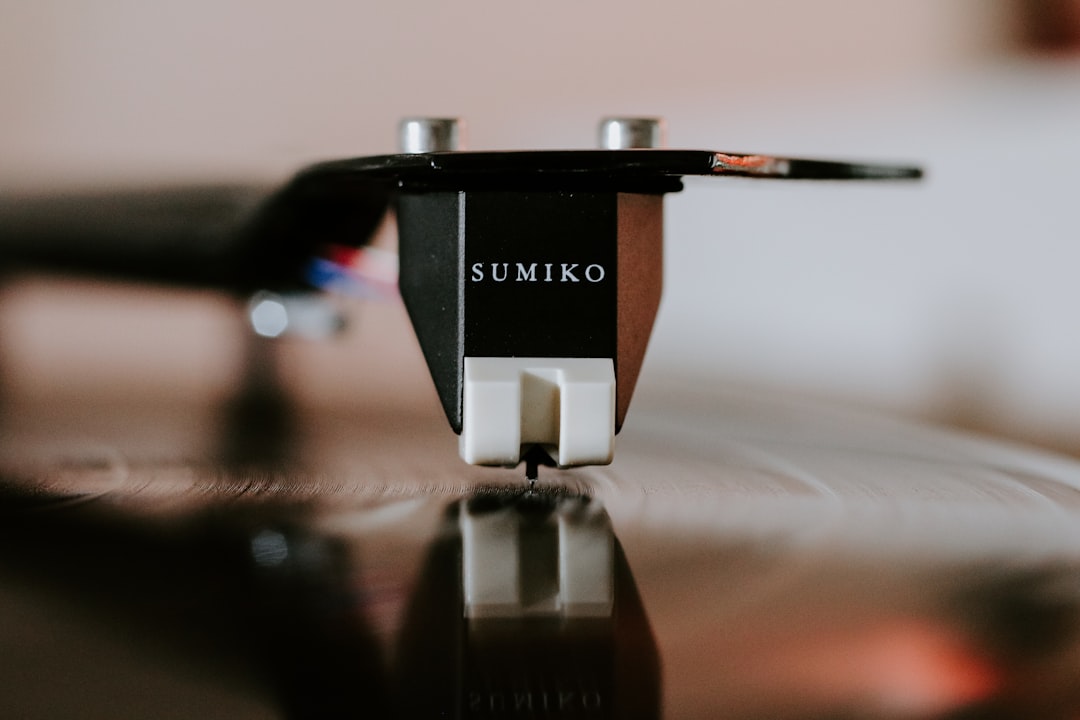
Photo by Tawshif Khan on Unsplash
Safety Warning: When integrating new equipment into a vintage system, always ensure your amplifiers and receivers are powered off before making connections. If you are performing maintenance on vintage tube-based preamps or amplifiers, be aware that large capacitors can hold lethal mains voltage even after the unit is unplugged. Always follow proper discharge procedures and consult a service manual before opening any chassis. If you are unfamiliar with high-voltage safety, contact a professional technician.
Why You Need a Dedicated Phono Preamp for Vintage Gear
The primary role of a phono preamp is twofold: amplification and equalization. A standard Moving Magnet (MM) cartridge outputs roughly 3.5 to 5 millivolts, which is far below the 200 millivolts required for a standard line-level input. Without a preamp, the sound will be whisper-quiet and thin. Beyond volume, the preamp must correct the RIAA equalization. During the record mastering process, bass frequencies are reduced and high frequencies are boosted to fit more music into the grooves and reduce surface noise. The preamp reverses this process, restoring the tonal balance.
In the golden era of HiFi, manufacturers prioritized the phono stage because vinyl was the primary high-fidelity source. A vintage Sansui or Pioneer receiver often featured discrete transistors and shielded power supplies dedicated solely to this task. However, as the industry shifted toward digital media in the 1990s, the phono stage was often the first victim of cost-cutting. Modern entry-level receivers frequently use a single, inexpensive chip to handle phono duties, resulting in a high noise floor and poor dynamic range.
By choosing a dedicated external preamp, you gain control over the gain and loading settings that internal stages lack. This is especially important if you plan to experiment with different cartridges. A dedicated unit also moves the sensitive low-level circuitry away from the large power transformers found in integrated amplifiers, which helps eliminate electromagnetic interference and “hum.” If you are serious about fidelity, you’ll need to treat the phono stage as a standalone component rather than a utility feature. This approach allows you to scale your system without replacing your entire amplifier every time you want better sound.
Best entry-level phono preamps compared: Technical specs and value
When looking at the entry-level market, two names consistently rise to the top for their balance of price and performance: Schiit Audio and Pro-Ject. These companies offer products that far outperform the built-in stages found in $500 integrated amplifiers. The Schiit Mani 2 Phono Preamp is widely considered the benchmark for versatility under $200. It features an impressive array of gain settings (35, 45, 48, and 60dB) and adjustable loading, making it compatible with both Moving Magnet and Moving Coil cartridges. The Mani 2 uses a passive RIAA network and high-end components like TI OPA1612 op-amps, which contribute to its exceptionally low Total Harmonic Distortion (THD).
In direct competition is the Pro-Ject Phono Box DC. While it offers fewer adjustable settings than the Schiit, it focuses on a “set it and forget it” philosophy with a very clean, neutral sound signature. The Phono Box DC uses specialized low-noise integrated circuits and features a dual-mono circuitry layout for better channel separation. This is a critical spec for vintage enthusiasts who want to maintain the wide soundstage characteristic of 1970s stereo recordings. The metal casing acts as a shield against RF interference, which is a common problem in urban environments or rooms with many electronic devices.
For those who are just starting out and using a basic turntable with a standard MM cartridge, the Pyle Phono Turntable Preamp provides the necessary amplification at a fraction of the cost. While it lacks the adjustable loading and ultra-low noise floor of the Schiit or Pro-Ject, it is a functional solution for casual listening. The tradeoff here is primarily in the “blackness” of the background; you will likely hear more hiss during quiet passages of music compared to the higher-end options. However, for a secondary setup or a first-time buyer, it is a practical entry point.
Understanding Loading and Gain in Entry-Level Phono Preamps
To make an informed decision, you must understand how gain and loading affect your cartridge. Gain is the amount of amplification applied to the signal. Most Moving Magnet cartridges require 35dB to 45dB of gain. If you use too little gain, you will have to crank your main volume knob, which can introduce noise from the power amp. If you use too much, the signal will clip, causing harsh distortion. The Schiit Mani 2 Phono Preamp excels here because its adjustable gain stages allow you to fine-tune the output to match the sensitivity of your specific cartridge.
Loading refers to the resistance and capacitance the cartridge “sees” from the preamp. Moving Magnet cartridges are sensitive to capacitance, which can affect the high-frequency response. Most require around 100pF to 200pF. If the capacitance is too high, the treble might sound rolled off or artificially bright. Moving Coil (MC) cartridges, on the other hand, are highly sensitive to resistive loading. While entry-level preamps often have a fixed 47k ohm load for MM cartridges, better units allow you to drop that resistance to 100 ohms or less for MC cartridges.
Manufacturer documentation, such as the Schiit Mani 2 Manual, provides specific dip-switch settings for various cartridge types. Following these standards is vital for achieving a flat frequency response. If you are using a vintage cartridge, you may need to look up its original specs to ensure compatibility. A mismatch in loading is often the culprit when a high-end turntable sounds “dull” or “thin.” Selecting a preamp with adjustable loading protects your investment as you upgrade your cartridge in the future.
Comparing the best entry-level phono preamps: A decision framework
Choosing between these units requires weighing your technical needs against your budget. If you plan to stick with a standard Moving Magnet cartridge like the Ortofon 2M Red or an Audio-Technica VM95E, the additional settings on high-end preamps might seem redundant. However, the quality of the power supply and the internal components still impacts the clarity of the audio. Use the following table to compare the core specifications of our top recommendations.
| Feature | Pyle PP444 | Pro-Ject Phono Box DC | Schiit Mani 2 |
|---|---|---|---|
| Cartridge Support | MM Only | MM and MC | MM and MC (High/Low) |
| Adjustable Gain | No (Fixed) | No (Fixed per type) | Yes (4 Settings) |
| Adjustable Loading | No | No | Yes (Multiple settings) |
| Input Sensitivity | 3mV | 3mV (MM) / 0.3mV (MC) | Variable |
| Signal-to-Noise | >70dB | 86dB (MM) / 68dB (MC) | 82dB to 90dB+ |
| Chassis Material | Plastic/Thin Metal | Full Metal Shielding | Full Metal Shielding |
When applying this framework, consider your long-term goals. If you are the type of hobbyist who enjoys tweaking and optimizing every aspect of your signal chain, the Schiit Mani 2 is the clear winner. Its ability to handle low-output Moving Coil cartridges means you won’t need to buy a new preamp if you eventually upgrade to a high-end cartridge. If you prefer a minimalist setup and want a device that is engineered for reliability and ease of use, the Pro-Ject Phono Box DC is a more streamlined choice. It provides a significant sonic upgrade over any built-in stage without the complexity of dip switches.
For those operating on a shoestring budget who are currently using a turntable with a built-in preamp that sounds muddy, even the Pyle Phono Turntable Preamp can sometimes offer a cleaner signal path if the turntable’s internal electronics are particularly poor. However, the Pyle is best viewed as a temporary solution. In the world of vintage audio, the preamp is where the “magic” of the vinyl format is either preserved or lost.
How to Set Up and Integrate Your New Phono Preamp
Proper installation is just as important as the hardware itself. Because the signal from the turntable is so low, it is extremely susceptible to picking up noise from nearby power cables or wireless routers. Follow these steps to ensure a clean installation:
- Placement: Place the phono preamp as close to the turntable as possible, but away from the amplifier’s power transformer. Large transformers in vintage receivers can induce hum into the preamp’s sensitive circuitry.
- Cable Choice: Use high-quality, shielded RCA cables. The run from the turntable to the preamp should be as short as possible (typically under 3 feet) to minimize capacitance buildup.
- Grounding: Connect the turntable’s ground wire to the grounding post on the phono preamp. This is the most critical step for eliminating “60-cycle hum.” Ensure the connection is tight and making metal-to-metal contact.
- Input Connection: Plug the RCA cables from the turntable into the “Input” jacks of the preamp.
- Output Connection: Plug a second set of RCA cables from the “Output” jacks of the preamp into a “Line,” “Aux,” “Tape,” or “CD” input on your receiver. Never plug an external phono preamp into the “Phono” input of a receiver, as this will result in extreme distortion and could damage your speakers.
- Power Sequence: Always turn on the phono preamp before your main amplifier to avoid a “pop” through your speakers.
If you are also working on the mechanical side of your setup, check out our guide on how to set up and calibrate a turntable from scratch to ensure your tracking force and VTA are correct before testing the new preamp. Additionally, if you find that your vintage RCA cables have oxidized connectors, you may need to learn how to solder audio connections safely to replace them with high-quality gold-plated terminals.
Common Mistakes and Troubleshooting Phono Preamp Issues
The most frequent problem users encounter when adding an external preamp is a persistent humming or buzzing sound. This is usually caused by a ground loop or improper shielding. If you hear a low-pitched hum that stays constant regardless of volume, check your ground wire first. If the ground wire is connected and the hum persists, try moving the preamp to a different shelf. Sometimes, simply rotating the unit 90 degrees can reduce interference from a nearby power supply.
Another common mistake is “double-preamping.” This occurs when a user has a turntable with a built-in preamp turned “ON” and then connects it to an external phono preamp. This will result in a signal that is incredibly loud, distorted, and heavy in bass. Always ensure that if your turntable has a built-in stage, the switch on the back is set to “Phono” or “Bypass” when using an external unit. Similarly, as mentioned in the setup section, never plug an external preamp into the Phono input of your receiver.
If the sound is distorted only on loud passages or “peaks” in the music, you likely have a gain mismatch. If you are using the Schiit Mani 2 Phono Preamp, try lowering the gain settings via the dip switches on the bottom of the unit. High-output MM cartridges (like those from Rega or some DJ-oriented Ortofon models) can easily overload a preamp set to 48dB or 60dB. Conversely, if you have to turn your receiver to 80% volume just to hear the music at a moderate level, you need to increase the gain.
Finally, ensure your RCA cables are fully seated. Loose connections are a primary cause of “intermittent” audio or a channel dropping out entirely. In vintage systems, the RCA jacks on the back of the receiver can become loose over decades of use. If the connection feels wobbly, you may need to gently tension the outer ring of your RCA plug with pliers to ensure a snug fit.
FAQ
Can I use a phono preamp to record my vinyl to a computer?
Yes, but you will need an additional interface. A phono preamp boosts the signal to line level, but it does not convert it to digital. To record to a computer, you would take the output of the phono preamp and plug it into the “Line In” of a PC soundcard or, preferably, an external USB Audio Interface. Some entry-level preamps come with a built-in USB output specifically for this purpose, but for the highest quality, a dedicated analog preamp paired with a high-quality Analog-to-Digital Converter (ADC) is the professional choice. This allows you to capture the full dynamic range and warmth of the vinyl without the limitations of a cheap, all-in-one USB turntable.
Does the power supply of the preamp actually affect the sound quality?
The power supply is a critical component of any phono stage. Because the preamp deals with such tiny voltages, any noise or “ripple” from the power source can be amplified along with the music. This is why many high-end preamps use large, external “wall wart” transformers or even dedicated linear power supplies to keep the AC noise away from the sensitive DC audio circuits. The Pro-Ject Phono Box DC specifically uses a DC power supply to minimize mains interference. If you find your preamp is noisy, ensure its power cable isn’t draped over other signal cables, as this can induce 60Hz hum into the audio path.
How do I know if I have a Moving Magnet (MM) or Moving Coil (MC) cartridge?
The vast majority of entry-level and mid-range turntables come with a Moving Magnet (MM) cartridge. MM cartridges are characterized by having a user-replaceable stylus (the needle assembly usually slides off). Moving Coil (MC) cartridges are typically much more expensive, have a non-replaceable stylus, and output a much lower voltage (often 0.5mV or less). If you aren’t sure, check the model number of your cartridge against the manufacturer’s website. If you are using a Moving Coil cartridge, you must have a preamp with a high-gain setting, such as the 60dB option on the Schiit Mani 2 Phono Preamp, or the signal will be far too quiet to use.
Conclusion
Upgrading to a dedicated phono preamp is the most significant “bang for your buck” improvement you can make in a vinyl-based HiFi system. By moving the sensitive equalization and amplification duties to a specialized external component, you reduce noise, improve clarity, and gain the flexibility to use a wider range of cartridges. Whether you choose the highly adjustable Schiit Mani 2 Phono Preamp for its future-proof features or the reliable Pro-Ject Phono Box DC for its clean signal path, you are taking a major step toward hearing your records as the artist intended.
For more tips on maintaining your setup, bookmark our site and check out our related guides below.