Best Record Weights and LP Clamps Compared: What They Do and Whether You Need One
This post contains affiliate links. As an Amazon Associate, I earn from qualifying purchases at no extra cost to you.
Record weights and clamps represent one of vinyl’s most debated accessories. Walk into any HiFi forum and you’ll find passionate arguments on both sides: some claim they transform playback clarity, others dismiss them as expensive placebos. The truth is more nuanced than either camp suggests. Adding mass to your turntable platter or clamping your record directly to the spindle does change how sound reaches your cartridge, but whether that change improves your system depends on turntable design, record quality, and listening priorities.
The core issue is physics: a vinyl record sitting loosely on a platter mat creates tiny gaps and micro-vibrations. Record weights and clamps pull the record flat against the mat or spindle, reducing those air pockets and dampening mechanical resonance. On some turntables this yields audible improvements in tracking accuracy and reduced surface noise. On others, particularly well-engineered belt-drive designs with optimized bearing damping, the effect ranges from subtle to imperceptible. This guide walks through how each approach works, compares three excellent options across different price points, and helps you decide whether your system benefits from one.
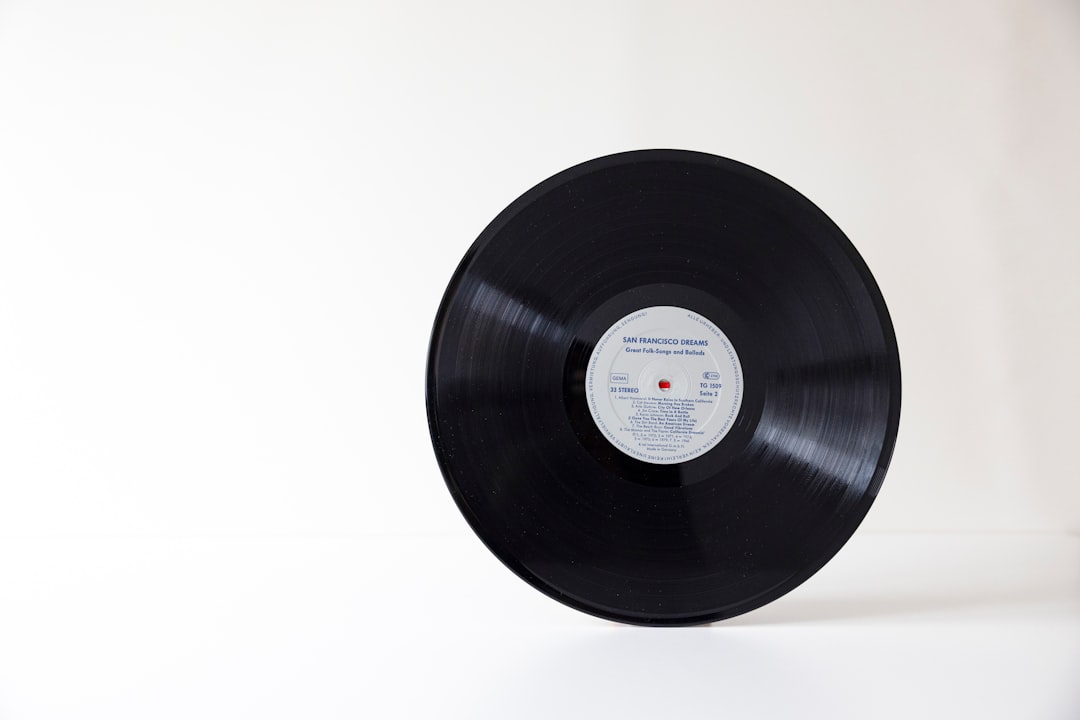
Photo by Markus Spiske on Unsplash
How Record Weights and LP Clamps Work
The mechanism behind record weights is straightforward: gravity pulls the record flat. A record sitting on a platter mat under its own weight (typically 160-200 grams) will settle reasonably flat, but it won’t conform perfectly to the mat surface. Dust, minor warping, and the texture of the mat itself create hairline gaps. Add a 500-1000 gram weight on top and those gaps collapse, improving surface contact.
This matters because better contact between record and platter affects two audible parameters: tracking error and resonance damping. Your cartridge stylus follows a spiral groove with incredible precision, but loose records introduce vertical play that forces the cantilever to compensate. This microscopic movement manifests as distortion, particularly in the inner groove region. A weight reduces that movement by making the record surface more rigid and predictable.
The second mechanism is resonance suppression. Vinyl records can vibrate at frequencies between 50 and 500 Hz, depending on thickness, material, and age. These vibrations couple into the platter, bearing, and tonearm, creating subtle frequency colorations that muddy detail and add a veiled quality to strings and vocals. Adding mass to the record-platter system raises the resonant frequency and dampens the amplitude through increased mechanical impedance. This is why you’ll read about acoustic resonance in turntable design - it’s a fundamental principle in high-end HiFi engineering.
Record clamps work differently. Rather than adding weight, they pull the record directly onto the spindle using a clamping mechanism (usually spring-loaded or screw-tight). This creates an even more rigid coupling between record and spindle, effectively making the record part of the rotational assembly. Clamps eliminate most record play while maintaining lower overall system mass than heavy weights. Some turntable engineers prefer clamps for this reason: they reduce resonance without adding energy to the platter itself.
The effectiveness of either approach depends on your turntable’s bearing design and platter mass. A Technics SL-1200, with its massive platter and low-friction sleeve bearing, will show less dramatic improvement than a Rega Planar 3 or mid-range Thorens TD-160, where the lighter platter and bearing design are more sensitive to additional damping. This is why no single accessory works universally.
Best Record Weights and Clamps Compared
Let’s compare three proven options spanning different price points and approaches. All three are verified to work with standard spindle sizes and common turntable designs.
Record Weights vs. Record Clamps: Key Differences
Record weights and clamps achieve similar goals through opposite mechanisms. Understanding the trade-offs helps you choose the right tool.
Record Weights rely on gravitational mass to flatten records and suppress resonance through added inertia. They’re passive devices - place them on the spindle and they sit there. The added mass increases the platter’s rotational inertia, which can smooth speed stability if your motor isn’t perfectly stable, but it also requires your motor to work harder. For direct-drive turntables with regulated supplies, this is negligible. For belt-drive models, particularly older designs or those with lower-torque motors, the added load can subtly reduce dynamic response under certain conditions.
Weights typically range from 400 to 1500 grams. The heavier the weight, the more pronounced the resonance damping, but also the greater the motor load. Most products settle in the 500-900 gram range as a practical compromise. The contact point varies: some weights sit on the record label and press down over the spindle, while others nest around the spindle itself, distributing load more evenly.
Record Clamps mount directly to the spindle and pull the record down with a clamping force rather than gravity. They’re active in the sense that they couple the record directly into the spindle assembly, making it a single rigid system. Because clamps don’t add passive mass, they produce less motor loading. They’re also faster to use - no fumbling with a weight - and they allow faster record changes in listening sessions.
The downside of clamps is their contact pattern. They create a concentrated clamping force at the spindle, which means stress concentrates near the center label. Some vinyl collectors worry about this, though modern clamps are designed to distribute force over a reasonable area. If your records have damaged labels or weak paper stock, heavy clamps could potentially accelerate damage. Weights, by contrast, distribute their mass across the entire record surface.
For resonance behavior, clamps can be superior because they integrate the record into the spindle assembly rather than adding mass to the platter. This creates a cleaner vibration path with less energy transfer to the platter itself. For tracking stability, both approaches work, but weights have a theoretical advantage: the distributed mass raises the effective moment of inertia, slightly smoothing any speed variations during sustained passages.
In practice, most listeners find either approach effective. Your choice often comes down to turntable design, personal preference on speed of use, and which aesthetic you prefer.
| Product | Type | Weight/Material | Price Range | Best For |
|---|---|---|---|---|
| Pro-Ject Record Puck E Modern Aluminium Record Weight (Black) | Weight | 530g Aluminum | $40-60 | Budget-conscious entry, lighter damping |
| Fluance HiFi Vinyl Record Weight Stabilizer RW02 (760g Steel) | Weight | 760g Stainless Steel | $50-80 | Mid-range, balanced resonance control |
| Pro-Ject Clamp It Record Clamp (Silver) | Clamp | Aluminum w/ Spring | $70-100 | Premium feel, minimal motor load |
Pro-Ject Record Puck E is the entry point. Its 530-gram aluminum construction is light enough that even budget turntables with modest motors won’t strain. The aluminum material offers good damping characteristics without the vibration signature that some find problematic with heavy steel weights. The cylindrical profile is understated, fitting mid-century aesthetics if that matters to you. The improvement is subtle on well-damped decks but noticeable on suspended-arm designs like older Regas. This weight works with any standard spindle configuration.
Fluance RW02 steps up to 760 grams of stainless steel, offering more aggressive resonance damping. Steel has a higher acoustic impedance than aluminum, which creates stronger standing wave suppression. If you’ve got a 1970s or 1980s turntable with a relatively light platter (under 1.5 kg), the Fluance produces more obvious improvements in inner groove distortion reduction and surface noise control. The heft is noticeable when removing it between records, which some find annoying in extended listening sessions. On direct-drive turntables like a Technics SL-1200, the difference versus the lighter Puck is minimal because the platter already masses 3+ kilograms.
Pro-Ject Clamp It represents the clamp approach. Its spring-loaded design automatically centers records while clamping them to the spindle with consistent force - no guessing about weight distribution. Aluminum construction keeps mass low while still providing rigid coupling. The clamping action is smooth and won’t damage labels if used gently. The main advantage is rapid record changing and a cleaner motor feel on belt-drive turntables. It’s compatible with all but the most unusual spindle designs. The premium price reflects the engineering and finish quality.
Which one to pick depends on your turntable type, motor, and listening goals. For a vintage Thorens or mid-range Rega on a budget, grab the Puck E and expect subtle but real improvements. For a suspended-arm turntable with known resonance issues, the Fluance’s extra mass pays dividends. For a direct-drive deck or if you value minimal motor interaction, the Clamp It is the engineered choice.
When a Record Weight Improves Sound - and When It Doesn’t
The effectiveness of record weights depends on turntable design, record condition, and what acoustic signatures bother you most.
Record weights shine on turntables with:
- Lightweight platters under 2 kg (most budget and mid-range belt-drives)
- Older designs where bearing play isn’t precisely engineered
- Suspended tonearms that move relatively freely, where platter vibration couples easily into the arm
- Records with slight warping or center warp, where additional downforce helps contact stability
- Systems where surface noise and inner groove distortion are audible problems
If your turntable matches these traits, a record weight typically produces obvious improvements within one or two albums. You’ll notice less fuzz around vocals, cleaner bass texture, and reduced pops and crackles on older records.
Record weights provide minimal benefit on:
- Heavy-platter direct-drive turntables (Technics SL-1200 and peers) - the platter is already a massive, well-damped resonance sink
- Modern belt-drive designs with precision bearings and optimized platter mass - manufacturers have already engineered resonance out
- Well-warped records - even 1000 grams won’t flatten a severe warp, and forcing it risks label damage
- Records in flawless condition played on pristine equipment - you’re already hearing the music as recorded
On these decks, weights produce subtle changes that some listeners hear as slight dynamic improvements, others hear as a slight loss of transparency (added mass can damp high-frequency detail if overdone). The benefit-to-cost ratio is poor.
The safest way to evaluate is to A-B test:
- Play a familiar album without a weight, noting the surface noise level, inner groove character, and overall clarity.
- Add the weight to the spindle, ensuring it’s centered and seated properly.
- Play the same passages again and listen for specific changes: reduced surface noise, cleaner inner groove detail, or a more solid bass feel.
- On receptive systems, the improvement is immediately obvious within one or two tracks. If you need 10 minutes to convince yourself something changed, your turntable probably doesn’t need it.
Some vinyl enthusiasts keep weights on hand for older pressings or worn copies, but remove them for pristine classical reissues or quiet jazz albums where added mass might slightly reduce the last octave of high-frequency extension. This flexibility is one advantage of removable weights over integrated clamps.
Is Your Turntable Compatible?
Nearly all record weights and clamps work with standard spindles, but a few design variations require attention.
Spindle size is the critical spec. The vast majority of turntables use a 12 mm spindle diameter (the hole through the record center is 12 mm, and spindles are slightly smaller to allow free rotation). All three products in this guide accommodate 12 mm spindles. Measure your spindle diameter if you have an unusual deck - some 1960s models used slightly different sizes.
Main bearing type affects how well added mass plays with your turntable. Oil-bath bearings (common in Thorens and older European decks) can develop subtle stiction if you add weight without ensuring proper bearing damping. Check your service manual before adding anything heavier than 600 grams if you own a bearing that might be aged. Sealed rolling-ball bearings (Technics, many modern decks) have high-precision clearances and don’t care about reasonable weight additions.
Motor torque matters most for belt-drive turntables. Your motor must have enough starting torque to accelerate the platter-plus-weight system to stable speed within 5-10 seconds of power-on. Budget turntables with weak capacitor-start motors sometimes take 15-20 seconds to stabilize with heavy weights. This isn’t a failure, but it can introduce slight wow until the motor settles. Test by watching the platter speed - ideally it reaches nominal speed (33.3 rpm) and holds stable within 3 revolutions. If it takes much longer, use a lighter weight or a clamp instead.
Spindle design occasionally conflicts with aftermarket products. Some turntables use hollow or flexible spindles that won’t support certain weight designs. If your spindle has a hollow stem or compresses under finger pressure, a clamp is safer than a weight because clamps grip the entire spindle assembly rather than threading onto a hollow core.
Check your turntable manual for maximum recommended spindle load if one is specified. Most manufacturers don’t list this, assuming record-only loading, so use common sense: anything under 1000 grams is safe for any turntable in reasonable condition. If your deck is valuable or rare, consult specialist forums - the Vinyl Engine turntable database hosts community knowledge on most models from 1960 onward.
Common Mistakes When Using Record Weights
Even straightforward accessories like record weights can be misused in ways that reduce their effectiveness or risk damage.
Mistake 1: Over-tightening a clamp or placing a weight off-center. Both errors concentrate stress in ways that amplify platter vibration rather than suppressing it. A clamp should grip firmly enough that you can’t rotate the record by hand, but not so tight that removing it requires tools. A weight should sit centered on the spindle with the record underneath, distributing mass evenly. Off-center weights create dynamic imbalance, which defeats the purpose. Some turntables have spindles that angle slightly - make sure your weight doesn’t tilt with it.
Mistake 2: Using weights on severely warped records. A 1000-gram weight won’t flatten a warped record - it will just press it harder onto the mat at an angle. This forces the stylus to work harder, increasing tracking force and risking groove damage. For warped records, use a weight if the warp is minor (under 2 mm total deviation), but recognize that no weight fixes serious damage.
Mistake 3: Ignoring motor startup behavior. After adding a weight, play your turntable and watch the platter during spinup. If it takes more than 10 seconds to reach stable speed or sounds strained, your motor may be underpowered. Some belt-drive turntables lose dynamic response under heavy load - you might hear a very slight compression of bass transients. This doesn’t damage anything, but it defeats the purpose of the weight if it compromises the energy of your playback.
Mistake 4: Assuming all weights and clamps are interchangeable. They’re not. Weights made for standard 12 mm spindles won’t work on 10 mm spindles. Clamps designed for spring loading don’t work on turntables with fixed spindles. Before purchasing, verify your spindle type and size. Reading product reviews isn’t enough - check the manual or contact the turntable manufacturer if uncertain.
Mistake 5: Not considering your platter’s acoustic signature. Some platters are designed to resonate at specific frequencies for tonal coloration. Adding mass might damp desirable resonance along with problematic resonance. If your turntable has a thin aluminum platter, weights will have a more obvious effect than on a thick brass or steel platter. Test on a few albums before committing to permanent use.
Mistake 6: Forgetting to clean the spindle and underside of the weight. Dust and debris on the spindle can prevent proper seating, leaving gaps that defeat the weight’s purpose. Before each use, wipe the spindle clean. Check the underside of the weight occasionally - buildup of dust reduces contact with the record surface.
Mistake 7: Using weights on automat turntables with moving platters. Some 1970s and 1980s changers had motorized platter mechanisms that park records for automatic play. Adding weight interferes with the mechanics. If you own an automatic turntable, skip the weight entirely - these designs already have heavy platters.
These mistakes are mostly avoidable with five minutes of thought and careful observation during the first use. The technology is simple enough that it rarely fails if installed correctly.
FAQ
Do I really need a record weight if my turntable was made in the last 10 years?
Probably not, especially if it’s a mid-to-high-end model. Modern turntables are engineered with resonance in mind - manufacturers use optimized platter mass, precision bearings, and sometimes integrated damping materials. You might hear a subtle difference from a weight on a new Rega Planar 1 or a budget AT turntable, but it won’t be the revelation you’d experience on a 40-year-old deck. Where weights shine is vintage and budget models that were designed before manufacturers understood resonance as deeply as they do now. A 1980s Thorens or a modern entry-level Audiotechnica will benefit. A current-year Technics SL-100C probably won’t. Listen before you buy - some dealers loan weights for trial.
Can a record weight damage my turntable motor?
Not if you use a reasonable weight (under 1000 grams) on a turntable in good mechanical condition. Motors are designed to accelerate the platter through friction, and adding 500-800 grams doesn’t exceed the duty cycle of any properly functioning turntable motor. What can happen on underpowered belt-drive turntables is sluggish startup - the platter takes longer to reach stable speed - but this doesn’t cause damage, just frustration. If your turntable struggles to spin up with a weight, remove it and use a clamp instead, or choose a lighter weight. Direct-drive turntables with regulated supplies can handle weights up to 2000 grams without any concern. If your motor is aging and already sluggish without a weight, don’t add one.
What’s the difference between record weights and record clamps, and which is better for my collection?
Weights add mass to reduce resonance through inertia; clamps couple the record rigidly to the spindle without adding much mass. Weights are better if you want easy record changing and prefer a passive solution. Clamps are better if you value a tight, engineered feel and want minimal motor loading. On most turntables they perform similarly for tracking improvement, but clamps have a slight advantage for resonance suppression on belt-drive tables because they don’t increase platter inertia. Weights have a slight advantage for speed stability on turntables with less-regulated motors. If you have a choice, try both and pick the one that sounds better on your system - this is one of the few turntable tweaks where personal preference is genuinely relevant.
Will a record weight help my turntable track better through scratches and worn grooves?
Yes, but only marginally. Adding weight increases downforce on the record, which helps the stylus maintain contact in damaged groove sections. However, the primary cause of skip or mistracking in worn grooves is insufficient stylus sharpness and tracking force, not record flatness. A dull stylus won’t be saved by 500 grams of weight. That said, if your tracking force is set correctly (typically 1.5-2 grams for moving magnet cartridges) and your stylus is sharp, a weight can prevent occasional mistracking on moderately worn records. For severely damaged records, nothing helps - you need either a new copy or to accept the skips.
How do I know if my turntable bearing is good enough for a heavy weight?
Play a record at moderate volume and watch the platter carefully in a well-lit area. A healthy bearing shows almost no vertical play - the platter might tilt or shimmy very slightly under sideways pressure, but it shouldn’t move up and down noticeably. If you can push the platter up and down with finger pressure, the bearing is worn and might not handle a heavy weight well. Most serviceable turntables have acceptable bearings even if slightly worn. If you’re unsure, start with a 500-gram weight (like the Puck E) rather than jumping to 800 grams, and listen for any subtle grinding noise during spinup. If the bearing sounds strained, stop using the weight. Alternatively, consult a turntable technician - a bearing inspection and oil refresh costs less than a premium weight and gives you peace of mind.
Conclusion
Record weights and clamps work. On the right turntable they produce audible improvements in tracking stability and resonance control. The caveat is that “the right turntable” is narrower than marketing suggests. Modern machines and heavy-platter direct-drives benefit minimally. Vintage belt-drives with light platters and older engineering benefit substantially. The three products in this guide span the practical range: budget, mid-range, and premium engineering. Before committing to one, borrow a weight from a dealer or friend and test it on an album you know well. Listen for reduced surface noise, cleaner inner grooves, and a more solid bass feel. If you hear obvious improvement after a few minutes, you’ve found a worthwhile tweak. If improvement is marginal or requires concentration to convince yourself it exists, save your money and apply it to cartridge upgrade or stylus replacement - those investments yield more dramatic returns on nearly all turntables.
Next step: grab a Pro-Ject Record Puck E if you’re on a budget, or listen to both options at a dealer before committing to a heavier weight. You’ll know within one album whether your system benefits.
If this guide helps you understand your turntable better, bookmark it for future reference or share it with fellow vinyl enthusiasts.