Best vintage Japanese turntables: Technics, Denon, and Pioneer compared on the used market
This post contains affiliate links. As an Amazon Associate, I earn from qualifying purchases at no extra cost to you.
Walk into any estate sale and there’s a good chance you’ll find one: a Japanese turntable from the late 1970s or early 1980s, dusty but intact, priced somewhere between twenty dollars and severe undervaluation. The golden era of Japanese audio manufacturing produced turntables that have outlasted nearly every piece of equipment built since, and the used market in 2026 still runs on the same three names it always has: Technics, Denon, and Pioneer.
The problem is that these brands are not interchangeable. Buying a Technics SL-1200 Mk2 is a fundamentally different proposition than picking up a Pioneer PL-12D, and neither of those prepares you for what you’re actually getting with a Denon DP-60L. Each brand has a distinct engineering philosophy, a different risk profile on the used market, and a different ceiling on potential repair costs.
This guide breaks down all three honestly and without nostalgia-driven inflation. If you’re a first-time buyer trying to spend under $200, you’ll find a clear recommendation. If you’re an experienced collector debating whether to pay a premium for a clean SL-1200, you’ll get the context to justify or talk yourself out of it. And if you already own one of these decks and want to understand what it actually needs to perform at its best, the practical sections below cover that directly.
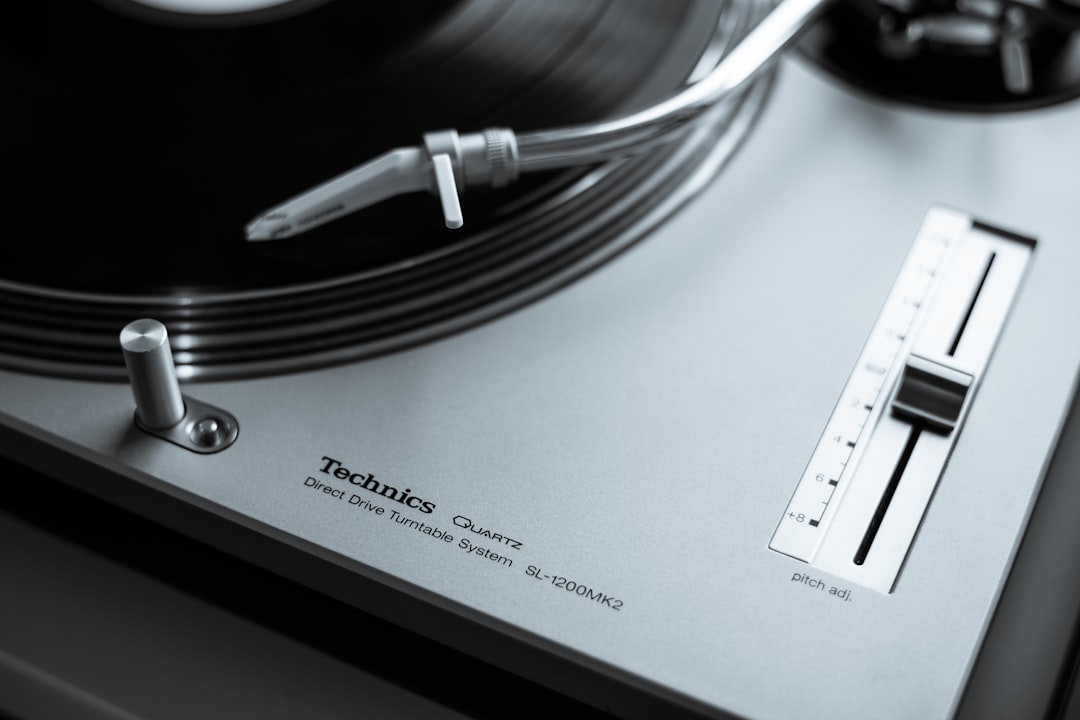
Photo by David Lozano on Unsplash
Why Japanese Turntables from the 1970s and 1980s Still Compete
Japanese audio manufacturers spent the better part of two decades, roughly 1965 through 1985, in a race to engineer turntables that could satisfy both professional broadcast requirements and the mass consumer hi-fi market simultaneously. The hardware that resulted is built to tolerances that most current budget turntables do not come close to matching.
The central innovation was quartz-locked direct drive, developed commercially by Technics in 1969 with the SP-10. Instead of a motor driving a rubber belt that in turn spun the platter, the platter itself became the rotor of the motor, governed by a quartz crystal oscillator that held rotational speed accurate to within fractions of a percent. Wow and flutter figures on top-tier Japanese decks from this era regularly measured below 0.025%, a benchmark that many modern budget turntables still cannot achieve. Service documentation for virtually every model from all three brands is archived on Vinyl Engine, the definitive online resource for vintage turntable service manuals. Before buying any vintage Japanese deck, look it up there. If the service manual is missing, treat that as a meaningful gap in your due diligence.
Material quality backs up the engineering. Cast zinc alloy plinths, thick aluminum platters, and glass-reinforced tonearm tubes were standard on mid-tier decks from this period. The tonearm bearings on a well-maintained SL-1200 Mk2 or Denon DP-60L are essentially the same components they were in 1978 and will continue to work given basic lubrication.
The used market advantage is direct: these decks depreciated fully decades ago. A Pioneer PL-516 that cost the equivalent of $400 in 1978 dollars might sell for $80 to $120 today. That is not always a bargain, because condition varies wildly, but the baseline build quality is there to reward a careful buyer.
Technics Vintage Turntables: The Direct-Drive Benchmark
The Technics SL-1200 is not just the most recognizable vintage Japanese turntable on the used market. It is the reference point everything else gets measured against. Introduced in 1972 and refined through multiple generations, the SL-1200 Mk2 (produced from 1978 through 2010) became the global standard for professional DJ use because its direct-drive motor, quartz lock, and robust tonearm could take punishment and stay in spec. Those same qualities serve dedicated vinyl listening just as well.
Direct drive eliminates belt degradation as a variable entirely. The platter speed is electronically governed rather than subject to the elasticity and temperature sensitivity of rubber. The tonearm is an S-shaped static-balanced arm with adjustable anti-skate, competent across a wide range of cartridges and extensively documented for cartridge swaps and upgrades.
Models to prioritize: The SL-1200 Mk2 and its black counterpart, the SL-1210 Mk2, are the sweet spot on the used market. Earlier Mk1 units (1972-1978) are collectible but harder to service. The Mk3, Mk4, and Mk5 iterations are all solid performers and share most components with the Mk2. Consumer-grade Technics direct-drive decks, including the SL-D2, SL-D3, SL-Q3, and SL-Q300, are worth considering at the right price. They use the same quartz-lock technology but have lighter plinths and simpler tonearms.
Known failure points: The tonearm lift mechanism can seize or become sluggish over time. The interconnect cables, soldered directly to the headshell connector on older units, corrode and need re-termination. The pitch control slider on DJ models accumulates grime and can introduce intermittent speed variation. None of these are disqualifying problems, but each is a real cost to account for when negotiating a purchase price.
Technics has continued the SL-1200 lineage into current production. If the condition variability of the used market is a genuine concern, the Technics Sl 1200 Mk7 Turntable - RCA (Grey) gives you the SL-1200 in current-production form with no restoration unknowns. You pay a meaningful premium over used Mk2 examples, but you are paying for certainty.
Denon Vintage Turntables: The Underrated Alternative on the Used Market
Denon is the most underpriced of the three brands on the used market, and that gap between build quality and asking price is the primary reason to pay attention. While collectors and DJs drove up SL-1200 values over the past decade, equivalent Denon decks from the same era sat at estate sales waiting for buyers who recognized what they were looking at.
Denon’s flagship DP-80 and DP-75 are reference-grade direct-drive decks with published specifications that rival anything produced by Technics. The DP-60L, more commonly encountered, is a semi-automatic direct-drive with a magnetically levitated tonearm bearing, which is genuinely impressive engineering for a mass-market consumer product. These represent genuine value relative to SL-1200 pricing for comparable performance.
The Denon DL-103 connection: Denon built both turntables and phono cartridges, and the DL-103 moving coil cartridge has been in continuous production since 1963, originally developed for NHK broadcasting. Pairing vintage Denon hardware with a DL-103 is not mere sentiment. Analog Planet has consistently documented the DL-103 as a competitive moving-coil cartridge at its price point, and this combination delivers a high-performance analog source that many modern systems cannot match dollar for dollar.
Entry-level Denon decks: The DP-29F and DP-23F are fully automatic belt-drive decks from the early 2000s, not the golden era, and they represent a clearly lower tier of build quality. If you pick up a DP-29F at a thrift store, the first maintenance item is almost always the stylus. A replacement compatible with the DSN-84 stylus assembly, such as the UCCKEYI For DENON DSN-84 Replacement Stylus Needle for DP-29F Analog DENON DP200USB, gets the deck functional again. Be realistic about what these decks are, though: serviceable entry points, not audiophile hardware.
What to look for at purchase: On the DP-60L and its siblings, check the auto-return mechanism carefully, as it is a known failure point. Inspect headshell contacts for corrosion and verify the platter spins without bearing noise. Parts sourcing for higher-end Denon models is more difficult than for Technics, which is the primary risk factor when buying mid-tier or flagship Denon on the used market. Price that risk accordingly.
Pioneer Vintage Turntables: Best Value With Known Tradeoffs
Pioneer’s lineup takes a different engineering path from the other two brands. While Technics chased quartz-locked direct drive and Denon built both direct-drive flagships and affordable automatics, Pioneer committed heavily to belt-drive design across most of its consumer product line. That distinction shapes both the sonic character and the ongoing maintenance reality.
Belt-drive turntables decouple the motor from the platter more thoroughly than direct drive in theory, and Pioneer’s better models, including the PL-516, PL-518, and PL-600, demonstrate lower motor-transmitted noise than some direct-drive equivalents. The unavoidable tradeoff is that every belt-drive turntable has a consumable component with a finite lifespan. Belts dry out, stretch, crack, and eventually slip or fail entirely. A Pioneer PL-10, PL-15, or PL-A45 that has sat in a closet for fifteen years almost certainly needs a new belt before it will run at accurate speed. The Turntable Drive Belt for Pioneer PL-10 PL-15 PL-A45 PL-X100 - Fixes Speed Issues Japanese Rubber Record Player Belt makes the difference between a paperweight and a functional deck.
Models worth pursuing: The PL-12D and PL-12D II are the most commonly encountered Pioneer decks on the used market and represent the practical performance floor of the lineup. The PL-516 and PL-518 step up with heavier plinths and better-specified tonearms. The PL-L1000, a linear-tracking turntable from the early 1980s, has a dedicated collector following and legitimately interesting engineering, though replacement parts are scarce and it demands a buyer who knows what they’re taking on.
Pioneer’s tonearm reality: Pioneer tonearms are generally adequate rather than standout. The headshell uses a standard half-inch mount, so upgrading the cartridge is always straightforward. Tonearm bearing quality varies more across Pioneer models than across equivalent Technics offerings, which makes a thorough physical inspection more important when buying Pioneer on the used market.
What to budget: Pioneer decks consistently occupy the bottom of the three-brand price range. Expect to pay $60-$150 for mid-tier models in working condition. Factor in belt replacement and a fresh cartridge when calculating your true total spend.
Comparing Vintage Japanese Turntables: Technics vs. Denon vs. Pioneer
The practical decision most buyers face is not which brand is superior in an absolute sense, but which brand makes sense for their specific situation, budget, and tolerance for restoration work. The table below covers the attributes that matter most when buying used.
| Attribute | Technics | Denon | Pioneer |
|---|---|---|---|
| Drive type | Direct drive (most models) | Direct drive (flagships/mid-tier) / Belt (budget) | Belt drive (most consumer models) |
| Speed stability | Excellent - quartz lock on SL-1200 series | Excellent on DP-80/75/60L; adequate on budget models | Good when belt is new; degrades as belt ages |
| Typical used price range | Varies by model | Varies by model | Varies by model |
| Parts availability | Excellent for SL-1200; good for consumer range | Moderate - harder for older flagships | Moderate - belts easy; tonearm parts harder |
| Common failure points | Tonearm lift, pitch slider, interconnect cables | Auto-return mechanism, headshell contacts | Drive belt, motor pulley, auto-stop mechanism |
| Restoration difficulty | Low to moderate | Moderate | Low to moderate |
| Best entry point | SL-D2 or SL-Q300 | DP-23F at thrift price / DP-60L | PL-12D or PL-516 |
| Best premium target | SL-1200 Mk2 or Mk3 | DP-75 or DP-60L | PL-518 or PL-L1000 |
The summary is this: Technics offers the most predictable restoration path and the strongest long-term parts situation. Denon offers the best value-to-quality ratio at the mid-tier for buyers who can assess condition accurately. Pioneer offers the lowest price floor, with the ongoing cost of a consumable-driven maintenance cycle built into ownership.
How to Inspect a Vintage Japanese Turntable Before You Buy
A structured pre-purchase inspection is the difference between acquiring a strong performer and inheriting someone else’s expensive problem. Run through these steps whether you’re at an estate sale, a record fair, or buying in person from a marketplace listing.
-
Spin the platter by hand and listen for bearing noise. With the motor off, give the platter a slow spin. A healthy platter bearing is silent or near-silent. Grinding, clicking, or a rough resistance indicates bearing wear or dried lubrication. This is repairable, but it adds real cost and time to your total investment.
-
Test all speed settings with a strobe. Bring a smartphone loaded with a strobe disc app, or use the turntable’s own strobe markings if it has them. The platter markings should lock cleanly at both 33 and 45 rpm. On belt-drive Pioneer and Denon decks, some drift at startup that corrects within a few seconds is normal; drift that persists throughout playback is a belt problem.
-
Check tonearm bearing play. With the tonearm unlocked and resting on the arm rest in balance, gently push the tonearm tube sideways. There should be minimal lateral play. Meaningful slop indicates worn bearings. Lower the tonearm using the cueing lift and observe: the descent should be slow and controlled. A tonearm that drops freely has a leaking or dried cueing damper.
-
Examine headshell contacts and the stylus. Corroded headshell pins are a frequent cause of channel loss and high-frequency distortion. They are cleanable, but factor that work in. Look at the stylus under a magnifier if possible. A bent cantilever or missing stylus tip means immediate replacement cost before the deck is usable for anything.
-
Check for plinth cracks and dust cover condition. A cracked plinth can transmit structural vibration directly into the bearing housing, causing performance degradation that is hard to trace. A cracked or missing dust cover is cosmetic only. Replacement covers for common models are available through eBay and specialized vintage audio parts dealers.
-
Power on and listen for motor hum near the platter surface. With the platter spinning and the tonearm in the rest position, place your ear close to the platter. Motor hum that transmits into the platter becomes a low-frequency buzz in playback. It points to a motor bearing problem or a grounding issue, both of which require investigation before purchase.
Once you’ve acquired a deck, a proper service pass before regular listening is always worth the effort. See our guide on How To Service A Vintage Turntable for the complete step-by-step procedure covering lubrication, belt replacement, and mechanical adjustment.
Common Mistakes to Avoid When Buying Vintage Japanese Turntables
Paying SL-1200 prices for SL-1200 cosmetics. The used market has absorbed enough online hype about Technics that sellers now price anything with a Technics badge as though it is a mint SL-1200 Mk2. A cleaned-up SL-D2 is a good turntable, but it is not the same machine as an SL-1200 Mk2 with its quartz-lock motor, professional-grade platter, and heavy-duty tonearm. Verify the model number on the front panel and confirm it on Vinyl Engine before agreeing to any price. The model number determines the value, not the brand badge.
Skipping the inspection because the price is low. A low-priced Pioneer PL-12D is either a potential bargain or a confirmed parts donor, and you cannot tell which from the exterior alone. Every used Japanese turntable deserves the structured inspection steps above, regardless of asking price. A seized bearing or a non-functional phono stage is not a free problem just because the deck cost almost nothing.
Assuming a belt-drive deck runs at accurate speed. This is the single most common and consequential mistake buyers of Pioneer and budget Denon decks make. A degraded belt produces speed instability that is subtle enough to miss on casual first listen but clearly audible as pitch waviness on sustained piano notes, bowed strings, or organ chords. If you cannot test with a strobe app at the time of purchase, budget for an immediate belt replacement on any belt-drive deck. A fifteen-year-old belt has almost certainly stretched beyond reliable use.
Overlooking the phono stage question. Many vintage Japanese turntables require an external phono preamp or a receiver with a dedicated phono input. Some later decks, particularly budget Denon and Pioneer automatics from the late 1990s and 2000s, include a built-in phono stage and connect directly to any line-level input. Confirm which applies before you leave with the deck. The rear panel answers this quickly: a switch labeled “LINE/PHONO” indicates a built-in preamp; a standard pair of RCA output jacks labeled for the tonearm means you need an external phono stage before connecting to a modern amplifier or receiver without a phono input.
Buying a DJ-market SL-1200 without accounting for heavy use history. Professional DJ decks have often accumulated thousands of hours of cueing, back-spinning, and needle drops. A deck that looks visually clean may have tonearm bearings worn well beyond what a typical home-use machine shows. Ask about provenance when evaluating SL-1200 or SL-1210 units. A DJ-use deck can be rebuilt, but tonearm bearing replacement costs can approach what you paid for the deck. Price that risk into your offer.
For everything that comes after the purchase, including geometry and overhang adjustment, our How To Align A Phono Cartridge: VTA, Azimuth, and Overhang guide covers the complete process.
Frequently Asked Questions
Which vintage Japanese turntable is the best starting point for a first-time buyer?
For most first-time buyers, a Pioneer PL-516 or PL-518 in confirmed working condition is the most forgiving entry point. These decks are affordable, accept standard half-inch cartridge mounts that accommodate a wide range of upgrades, and use a belt-drive design that is straightforward to maintain. The most likely first repair, a new drive belt, is straightforward to address. If your budget allows, a Technics SL-D2 gives you direct-drive speed stability without paying SL-1200 premiums. Mid-tier Denon decks are excellent hardware but require more confident condition evaluation at the point of purchase.
Is the Technics SL-1200 Mk2 worth its current used market price?
For a clean, fully functional Mk2, the answer is yes for buyers who prioritize long-term reliability and parts availability. The direct-drive motor, quartz lock, and robust tonearm represent an engineering standard that few competing decks can match. The main risk is paying a premium for a worn DJ unit with tired bearings. Always inspect tonearm play and test speed stability with a strobe before committing to any SL-1200 purchase. If condition uncertainty is a dealbreaker, the current-production Technics Sl 1200 Mk7 Turntable - RCA (Grey) eliminates that risk, though at a higher price than used examples.
Do vintage Japanese turntables need a separate phono preamp?
Most vintage Japanese turntables output a raw RIAA-equalized signal at moving-magnet levels and require either a receiver with a dedicated phono input or a standalone phono preamp. Some later models, particularly budget Denon and Pioneer automatics from the late 1990s onward, include a built-in phono stage and can connect directly to any line-level input. The fastest way to check is the rear panel: a switch labeled “LINE” or “PHONO” indicates the built-in preamp is present. If the only outputs are two RCA jacks labeled for the tonearm, you need an external phono stage before connecting to a modern amplifier or receiver without a phono input.
Conclusion
Technics, Denon, and Pioneer each represent a coherent engineering approach to analog playback, and the right choice depends far less on brand prestige than on what you’re prepared to inspect, service, and spend. For most first-time buyers, Pioneer at the entry level or a consumer Technics like the SL-D2 offers the lowest-risk path into vintage Japanese analog. For buyers who want to acquire once and stop second-guessing, the SL-1200 Mk2 earns its used market price on the merits. And for collectors willing to hunt patiently and evaluate condition accurately, Denon’s mid-tier direct-drive decks remain the best-kept secret in this category.
Whichever brand you pursue, budget for a service pass before serious listening. Fresh lubrication, a new stylus, and correct cartridge alignment will tell you far more about what these decks can actually do than any used market listing ever will.
Bookmark this page before your next estate sale or marketplace browse, or leave a question in the comments if you’re evaluating a specific model.
Related Reading