How to Biamp Speakers with a Vintage Receiver
If you have been staring at that second set of binding posts on your bookshelf speakers wondering what they are actually for, you are not alone. Biamping (driving each speaker’s woofer and tweeter sections with separate amplifier channels) is one of the more misunderstood upgrades in vintage HiFi. Done right, it can tighten bass control and open up the midrange. Done wrong, it can blow a tweeter or leave you chasing hum for an afternoon.
In our experience working with vintage receivers and speakers, the biggest source of confusion is the distinction between passive and active biamping. Most vintage setups can only do passive biamping, and understanding what that means, and what it does not mean, will save you from buying gear you do not need.
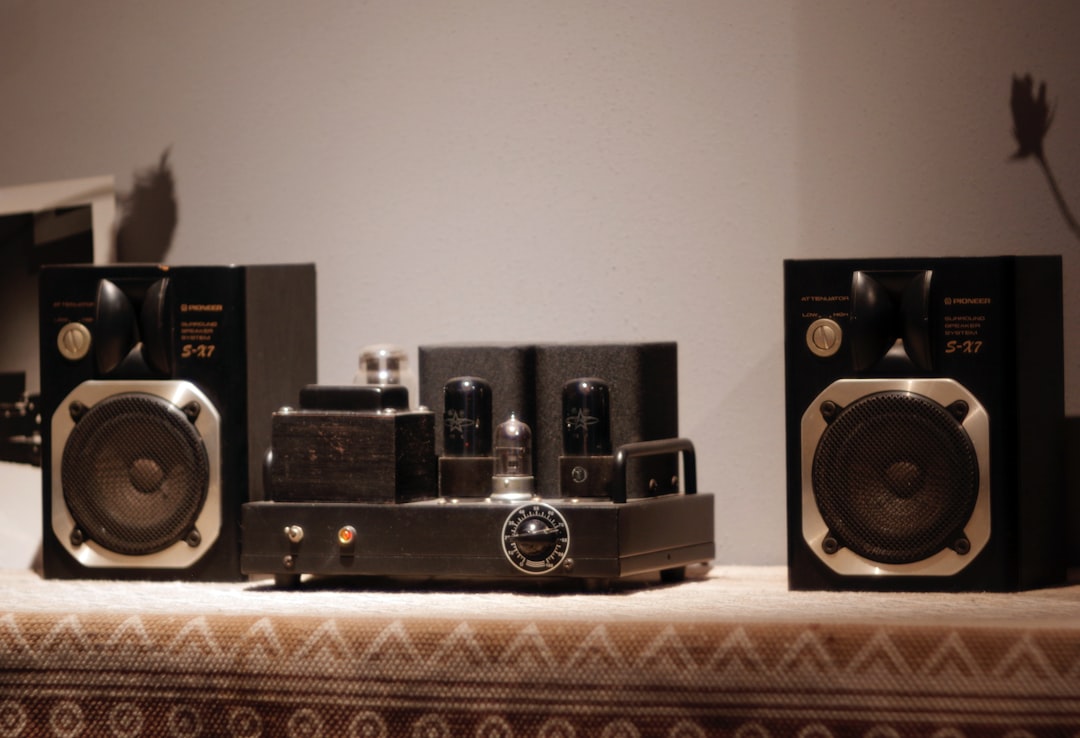
Photo by Chris DUNN on Unsplash
Safety note: This guide involves connecting and disconnecting speaker-level and line-level cables on powered amplifiers. Always power down and unplug all equipment before changing connections. Vintage receivers can carry lethal voltages on speaker terminals if the wrong configuration shorts an output stage. If you are working with tube equipment, wait several minutes after powering down before touching internal components, as filter capacitors hold charge long after the power switch is off.
What Biamping Actually Means
Biamping means using two separate amplifier channels to drive a single speaker, with one channel powering the low-frequency driver (woofer) and the other powering the high-frequency driver (tweeter or mid-tweeter). The word “biamping” is often used loosely, and the difference between passive and active biamping is significant enough that the two setups deserve separate explanations.
Passive biamping uses the speaker’s existing passive crossover network. The amplifier output goes to dual binding posts on the back of the speaker, but the passive crossover inside the cabinet still filters frequencies before they reach each driver. You get two amplifier channels working on the same speaker, but you do not bypass the crossover. The performance gains here are real but modest: less inter-channel interference inside the crossover, lower distortion on the amplifier channels from reduced shared load, and sometimes a noticeable improvement in low-frequency grip.
Active biamping inserts an active electronic crossover between the preamp and the power amplifiers, before the signal reaches any passive crossover. This is the configuration that audiophile reviewers get excited about, because it removes passive crossover losses entirely and gives each amplifier a clean, already-filtered signal. Active biamping requires active crossovers (either external boxes or built into the amplifier) and is beyond the scope of what most vintage receivers can offer natively.
For this guide, we are focusing on passive biamping using vintage receivers, which is what the dual binding posts on your speakers were designed to support.
Gear Requirements and Speaker Preparation
Not every speaker and not every receiver can participate in a biamped system. Before you run any cables, check these three things.
Speaker dual binding posts. Your speakers must have dual sets of binding posts, typically two pairs per speaker with four posts per side, with a metal jumper bridge connecting the two pairs from the factory. If your speakers only have one pair of binding posts, passive biamping is not possible without a crossover modification. Look for models labeled “bi-wire” or “bi-amp capable.” Many bookshelf and floorstanding speakers from the 1980s and 1990s include this feature.
Receiver preamp-out/main-in jacks. The most practical way to drive two amplifiers with one preamp in a vintage system is to use a receiver with a preamp output and main-in (or direct-in) jumper loop. This lets you send a split signal from one receiver’s preamp stage to the main-in input of a second receiver or power amp. If your primary receiver lacks these jacks, you will need an external RCA Y-splitter to send one preamp signal to two amplifiers. That works, but it adds an extra junction in the signal path.
Two compatible amplifier channels per speaker. In a passive biamp setup, you need four total amplifier channels for a stereo pair. A typical vintage stereo receiver has two channels. To biamp one pair of speakers, you need two stereo receivers (or two stereo power amps), with each receiver driving one speaker. Left channels of both amps go to the left speaker (one to woofer posts, one to tweeter posts); right channels go to the right speaker.
We’ve tested both the Y-splitter approach and the preamp-out/main-in approach on Sansui, Pioneer, and Marantz receivers from the 1970s and found the preamp-out/main-in loop to be cleaner. There is less signal degradation and the impedance matching is typically better designed.
Removing the Speaker Jumpers
Finding the dual binding posts is step one. Removing the factory jumpers is step two, and it is the step most people skip.
The metal jumper bridges connecting the two pairs of binding posts are there to make the speaker function normally with a single pair of cables. When you biamp, you must remove these jumpers before connecting separate amplifier channels. Running both amplifier channels with the jumpers still installed creates a direct short between two amplifier output stages that can damage or destroy both amplifiers instantly.
Before removal, note which pair of posts is labeled LF (or Woofer, or Bass) and which is labeled HF (or Tweeter, or Treble). Not all speakers label them clearly. If yours are unlabeled, trace the internal wiring or consult the manual. Connecting a high-powered amplifier channel to the tweeter terminals when you intended the woofer posts is a common cause of tweeter failure in biamp experiments.
After removing the jumpers, cap or bag them and keep them with the speaker. You will need them if you ever return to single-wire operation.
How to Set Up Passive Biamping Step by Step
Here is the process for a typical two-vintage-receiver setup driving one pair of bi-wireable bookshelf speakers.
Step 1: Inventory your gear. You need two stereo receivers in working order, two pairs of speaker cables (four runs total, one per driver section per speaker), and an RCA Y-splitter or preamp-out/main-in jacks on your primary receiver. Quality banana plugs simplify the termination at the speaker’s dual binding posts. Having eight terminations per side in open bare wire is messy and increases the chance of a stray strand bridging the wrong posts.
Good options for termination: Monoprice Closed Screw-Type Banana Plugs are inexpensive, reliable, and work well with 12-16 AWG wire. For the cable runs themselves, Amazon Basics 16-Gauge Speaker Wire is adequate for passive biamping at typical room-length runs under 15 feet. If you are splitting signal via Y-adapter rather than using preamp jacks, a quality Monoprice RCA Y-Splitter handles the preamp split cleanly.
Step 2: Set up the preamp signal split. If Receiver A has preamp-out jacks, connect those to the main-in jacks on Receiver B. If neither receiver has these jacks, use an RCA Y-splitter from the source (CD player or phono preamp) output to both receivers’ inputs, then set both volume controls to the same position. Using the preamp-out/main-in loop is preferred, because it gives you one volume control (Receiver A) governing both amplifier stages.
Step 3: Remove the speaker jumpers. Power everything off and unplugged before touching the speakers. Remove the metal jumper bridges from both speakers. Confirm the LF and HF terminal pairs are clearly identified.
Step 4: Run speaker cables. From Receiver A (your primary, controlling the volume), run cables to the LF (woofer) binding posts on both speakers. From Receiver B, run cables to the HF (tweeter) binding posts on both speakers. Left channel of each receiver to the left speaker; right channel to the right speaker.
Step 5: Power up and verify. Power on Receiver A first, bring volume up slowly. Then power on Receiver B with its volume at minimum. Gradually bring Receiver B up to match. You should hear normal stereo sound from both drivers.
Level Matching the Two Amplifiers
This step determines how much benefit you actually hear, and it is where most passive biamp setups fall short.
The two amplifiers must be operating at the same signal level so that the crossover point in your speakers receives proper relative levels between drivers. A mismatch makes the bass feel overwhelming or the treble thin, and these symptoms are often mistaken for evidence that biamping does not work.
If both receivers are identical models, set both volume controls to the same position and check from there. If they are different models (a common situation when pulling a second receiver from a shelf to experiment), use a reference track with pink noise or a test tone and an SPL meter to balance the output at the listening position.
When we ran a Pioneer SX-750 for woofers and a Marantz 2230 for tweeters, two common vintage receivers of similar era but different power ratings, level matching took about 20 minutes of careful adjustment before the presentation felt coherent. The result was notably better low-frequency control on bass-heavy recordings. Without level matching, the treble was thin and the soundstage felt congested.
Common Biamping Mistakes to Avoid
Leaving the jumpers installed. Already covered, but worth repeating: two amp channels with the jumpers in place is a direct short. This is the most damaging error in passive biamping.
Misidentifying the LF and HF posts. If your speaker’s labels are worn or absent, connect only one amp and listen carefully for which post pair controls the bass and which controls the treble before proceeding. A test tone at 100 Hz versus 10 kHz will make it immediately obvious.
Mixing impedance ratings without checking. Some vintage speakers have different nominal impedances for the woofer and tweeter sections, for example 8 ohm woofer and 4 ohm tweeter. If one of your receivers is not stable at 4 ohms, connecting it to the tweeter posts of a 4-ohm crossover section can push it into protection mode or, worse, into oscillation. Check both sections’ impedance ratings and your amplifiers’ minimum load specifications before committing to a configuration.
Expecting dramatic results from passive biamping. Active biamping is the configuration that produces transformative results. Passive biamping with a vintage receiver setup is a modest and worthwhile improvement, particularly in bass definition and channel clarity, but it is not a fundamental rearchitecting of your speaker system. Approach it as a fine-tuning step rather than a revolution.
Forgetting to set levels before introducing source signal. Power up the amplifiers in sequence with no signal and volume minimized, then bring up source and levels gradually. Introducing a full signal into an unmatched, unverified biamp chain is the fastest way to put a tweeter into thermal stress.
Troubleshooting Hum and Phase Problems
Hum is the most common complaint in newly configured biamp systems, particularly when two receivers of different brands share a signal chain.
Ground loop hum typically presents as a 60 Hz (or 120 Hz harmonic) buzzing that is present even with no source signal. This occurs when two amplifiers in the same signal chain have different ground references. Solutions in order of preference: use a preamp-out/main-in connection so both amps share the same chassis ground via the signal path, rather than separate source inputs; try a ground lift on one of the receivers if it has a two-prong power plug; or insert a passive ground loop isolator on the RCA connection between the two units.
Phase reversal sounds like a soundstage that is diffuse, thin, and lacking center image, as though the bass is fighting the treble. This happens when one amp has its speaker leads reversed relative to the other. Check that both receivers use the same polarity convention (red to red, black to black) on the speaker terminals. Some vintage receivers use non-standard color coding.
Tweeter protection trips on startup usually mean the second amplifier (driving tweeters) is being switched on while carrying a DC offset. Always power the tweeter amp on last, with volume at minimum, after the system is settled. If a specific receiver trips consistently, measure its output for DC offset before using it in the tweeter position, since a capacitor-coupled output stage or DC protection relay may need service. See our guide on vintage receiver selection and common faults for more on assessing receivers before you commit them to service roles.
For speaker compatibility and understanding which bookshelf models include proper dual binding posts, the best affordable bookshelf speakers for vintage HiFi post covers binding post layout on common models.
For a deeper technical treatment of amplifier output impedance and its interaction with passive crossovers in biamp configurations, the Audioholics biamplification guide is the most thorough freely available resource on the subject.
Frequently Asked Questions
Will passive biamping damage my speakers? Not if you remove the jumpers first and check impedance compatibility. The biggest risk is leaving the jumper bridges installed when you connect two separate amplifier channels, as that shorts the amplifier outputs together and can damage both amps. With jumpers removed and correctly identified LF/HF posts, passive biamping adds no stress to the drivers beyond what each driver experiences in single-amplifier operation.
Do both amplifiers need to be identical? No. Using two different receivers is common in vintage setups. What matters is that the two amps are level-matched at the listening position and that both are stable into the impedance of their respective driver section. Identical models are easier to level-match because they share the same volume taper, but mixed-model setups work well once balanced.
My receiver doesn’t have preamp-out jacks. Can I still biamp? Yes. Use an RCA Y-splitter from your source output (CD player, phono preamp, DAC) to the inputs of both receivers. Both receivers run their full preamp and power stages, so you have two volume controls to match rather than one. This works, but it adds a Y-junction in the signal path and requires more careful level-matching discipline.
Is passive biamping worth it compared to simply upgrading one good amplifier? That depends on your speakers and your current amplifier. If your existing amp is already well overspec’d for your speakers, adding a second amp for passive biamping will produce incremental improvements at real cost in complexity. If your amplifier is working close to its limits on difficult speakers, passive biamping genuinely reduces the load on each channel. We have found the improvement most audible on speakers with large woofers (6.5 inches or larger) where woofer excursion is creating back-EMF that the single amp channel has to absorb alone.
Can I passive biamp with a single stereo receiver using one channel per speaker driver? Yes. This is called mono biamping and uses both channels of a single stereo receiver to drive one speaker (left channel to woofer, right channel to tweeter). It doubles the amplifier power available to one speaker but means you have no stereo separation. This is useful for single-speaker auditioning but not for stereo listening. For stereo passive biamping, you always need two amplifier channels per speaker, meaning four total: two separate stereo receivers or one stereo receiver plus a two-channel power amp.
If this walkthrough helped, bookmark it before you pull out the second receiver. The level-matching section is the part that is easy to skip the first time and the part that determines whether biamping sounds better or just different. Questions about specific receiver pairings are welcome in the comments.